Sunday, January 13, 2019

Periodicity 2: Pattern Recognition

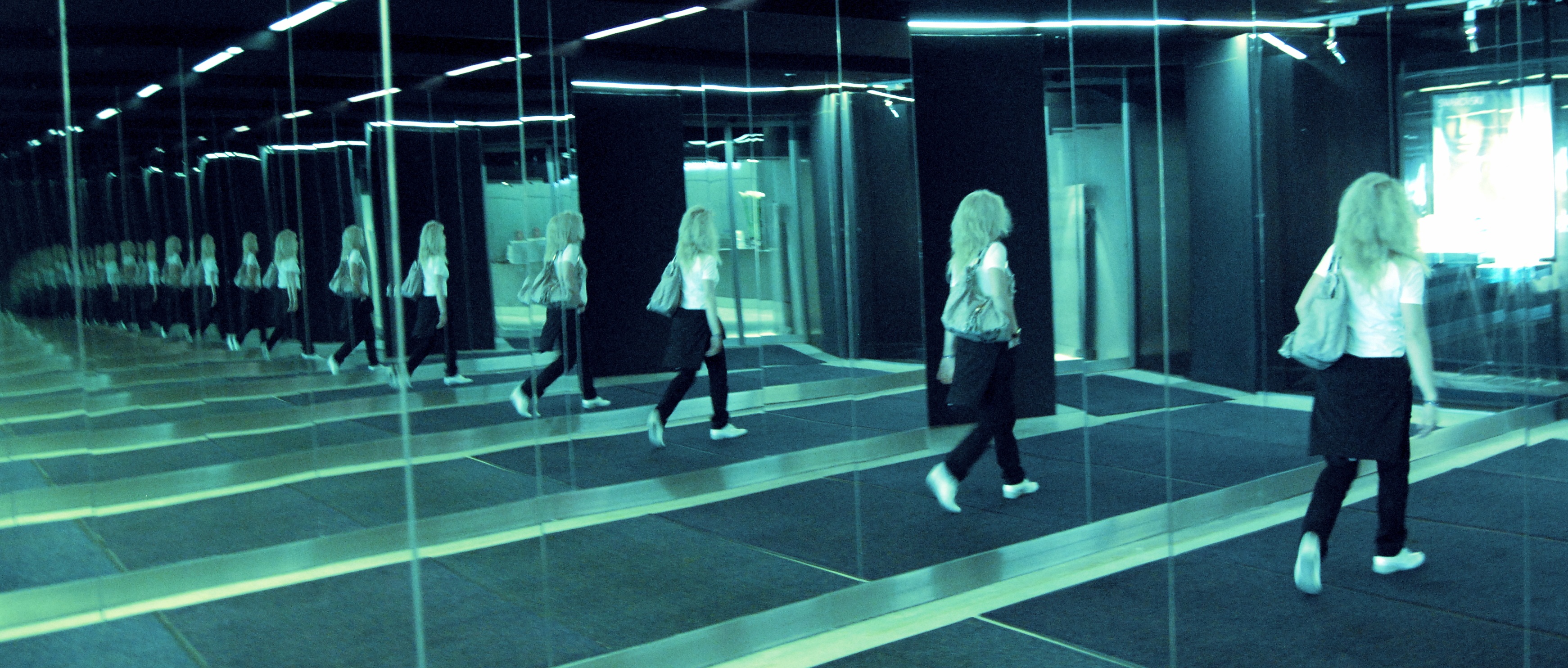
Infinity woman. Permission: used under a CC0 license.

I’m going to deviate from yarn crafts for a moment and talk about art in general.

There’s a concept that applies to all arts and crafts:

  • 1x is a mistake
  • 2x is weird
  • 3x (or more!) is a pattern.
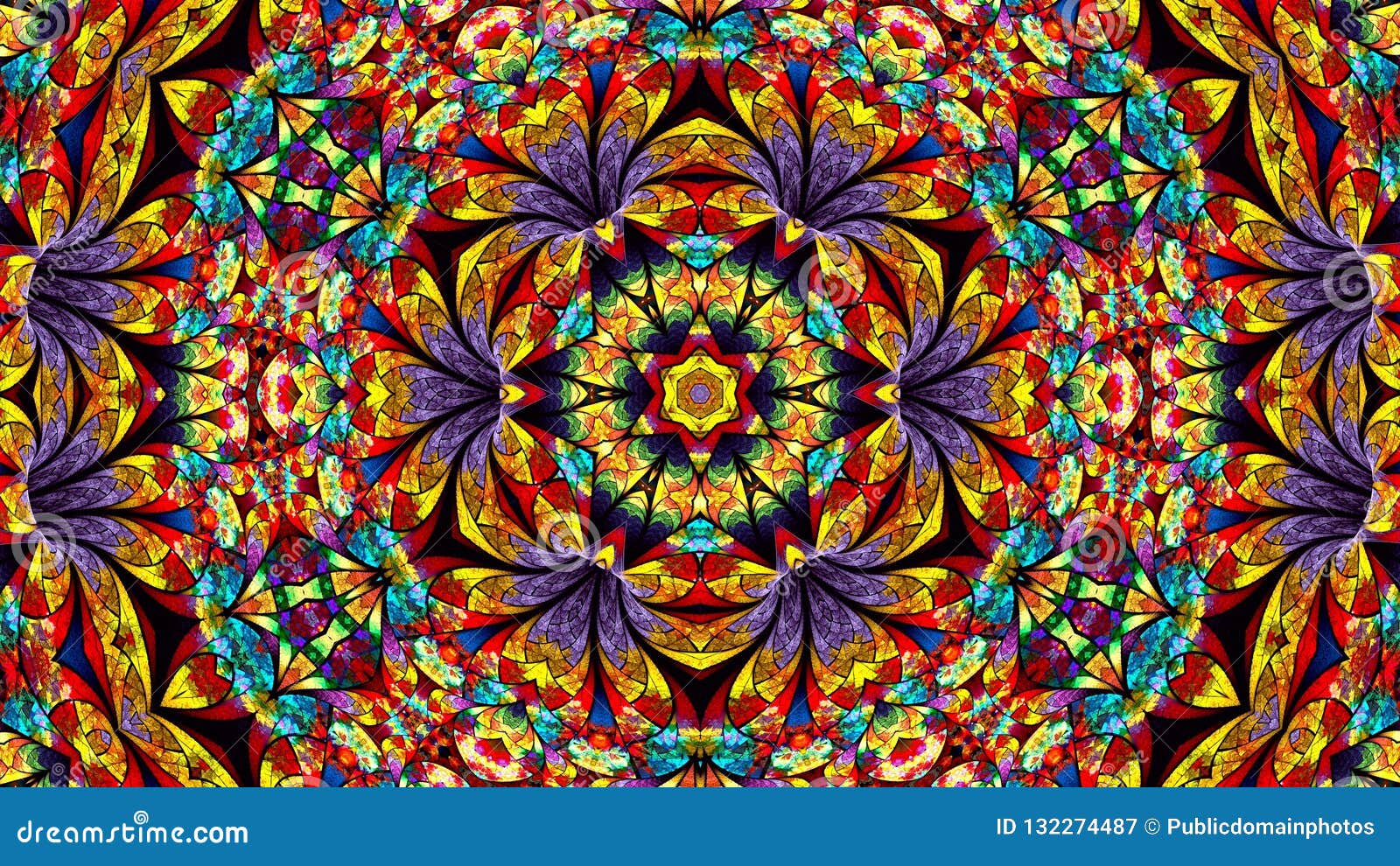
Repetition creates motifs, or design features.  The human brain is hardwired to search for patterns, and there is a tendency to find rhythmic repetition pleasing.  Music is one example of that.  But it holds true visually as well.  Children (and adults) have been fascinated with kaleidoscopes, and infinity mirrors for as long as we’ve had the ability to create them.

Kaleidoscope. Permission: Public domain

Grouped paintings (triptychs for example) are often prettier together than when viewed separately, and the separation between panels becomes part of the work of art.  (Remember that bit about the separation - it's important later).

Take a look at this one:

The Crucifixion by Rogier van der Weyden, 1445. Permission: Public domain

Look at the work as a whole, and evaluate the story being depicted. Now, one at a time, look at each panel alone (hold your hands up over the screen and block the panels you don’t want to see).

Notice how you only get part of the story?  Now look at the work as a whole again. See how there are repeated motifs - each panel has at least one dark angel at the top, and has the same shade of red somewhere in it, and the right two panels have blue in the clothing, but the left panel doesn’t - it’s primarily dark and the heaviness helps to balance the much greater red content on the right.

Quilts (hey, at least we are talking about a fiber art now!) are another excellent example of theme  repetition.  Many traditional designs repeat a motif over and over, each one slightly varied.  Go to Google and search for “Sunbonnet Sue Quilt.”  Click on images and scroll down.  Do you see how the repetition with slight difference can be really pleasing to the eye?

Modern quilts (and some traditional ones) may have little, or no repetition in the pieced top - instead, the quilting stitch pattern that holds the layers of the quilt together is repetitive. And often BOTH are.  Even the type of quilt called a “crazy quilt” typically repeats motifs in some manner, as shown here.

Small Sized Silk Crazy Quilt made by Mrs. Brown circa 1890.
Permission: Missouri Historical Society Open Access Policy

What does this have to do with yarn crafts?  I’m glad you asked. :-)

Often, you’ll see discussion among knitters who have made a mistake in their knitting, and someone usually offers up “repeat it and it becomes a design feature.”  And while they are totally right, it’s extraordinarily difficult to deliberately repeat an actual mistake and have it turn out well (and not just look like multiple mistakes).  Possible, yes. Easy, no.  But it’s not really about correcting mistakes, it’s about experiencing the repetition of a motif from the moment you start knitting with variegated yarns.

  • Variegated yarns are themselves a repetition of a motif.   
  • Variegated yarns are in and of themselves a repetition of a motif.   
  • Variegated yarns repeat a color motif.   

The colors repeat rhythmically, in a predictable fashion.  That property is at the HEART of these yarns. 

What makes working with variegated yarns difficult - and yes incredibly exciting and surprising - is that knit and crochet and weaving is ALSO rhythmic and repetitive. And it is the intersection between the rhythmic activity and the rhythmic colors where the magic happens.

So, is it any surprise, that much of the advice to achieve the various effects also involves different forms of repetition?

  • Do you want to break up pooling and mix the colors more?  Alternate skeins every other row or every round or two; or if you’ve only got one skein, knit from both ends.  
  • Do you want to flash the colors?  Easy - repeat the magic number.
  • Do you want to concentrate the colors? Repeat a short rows sequence every time you encounter a certain color 
  • Do you want to pair with a solid?  Stripes, Brioche and slip stitches to the rescue.  

Not all of the techniques involve repetition, but most do.

Back to TOC, or go to Part 3.

Periodicity 1: Introduction

Photo © Cathy Weeks
Periodicity: Variegated Yarns
Or: 
The Yarnie’s Dilemma: How to make a colorful silk purse out of a clown barf sow’s ear


I have a not-so secret obsession: I love variegated yarns.  I’m drawn to them, and I rarely resist their siren-call.

The problem?  They are hard to knit with.  They produce weird fabric that ranges from wonderfully colorful to really, really ugly - a strange, mottled mess that you wouldn’t be caught dead wearing.

And, it’s entirely subjective. Some people love the flickery wash of color, while others hate it. I know of knitters and crocheters who - as much as they love the look of the multi-colored skein of yarn - refuse to buy them because they don't love the fabric they produce.

And because I love the yarns so much, I decided to explore what works and what doesn’t, and did what many yarnies do, and started a thread of Ravelry (you'll need a Ravelry ID to click through):

https://www.ravelry.com/discuss/techniques/3862920/ 

Many, many thanks to those knitters, crocheters, weavers and dyers who filled in the gaps in my knowledge. Thank you all for your considerable time and efforts.

Photo © Cathy Weeks

I hope to accomplish two things with this series:

  1. Help people figure out what to do with variegated yarns to create a fabric they will love.  In other words, help yarnies match a yarn to the right pattern.
  2. Encourage designers to specifically create patterns intended for variegated yarns that really emphasize and utilize the colorful nature of the yarn itself.


Before I get started, I should define some terms.

Yarnie: A person who works with yarn. I am a knitter but yarnies are all one fiber family, with spinners and dyers as the parents, and knitters, crocheters and weavers as the siblings who make fabric using the yarn produced by the parents. I tried to make this series as craft agnostic as possible, as many of the concepts apply across disciplines, though I suspect it will be of least use to weavers.

Variegated:  The dictionary will tell you it just means “multi-colored.”  But in this context, it means a multi-colored yarn that has relatively short sections of two or more colors that repeat in a predictable fashion.   It is not: "self-striping," tonal (two-toned), gradient, marled, tweed or speckled as its main attribute.  If you want to know more about these color types, see the colorful yarns appendix. Variegated yarns may include aspects of the above; gradients, marling, speckles may all be present in a variegated yarn.  And technically speaking, variegates do self-stripe, if the fabric is narrow enough (but more on that later).

A note on personal taste: As you read though this, you’ll almost certainly find yourself cringing at some of “good” items, and really liking some of the “bad” ones.  This is to be expected.  Just know that all photos used are either my own, or I had the permission of the person who made the item.  The purpose of this article is simply to show you what techniques are out there and allow you to chose which ones to use, to make the best of these lovely, difficult yarns.

Photo © Cathy Weeks

Want to keep reading? Back to TOC, or Periodicity 2: Pattern Recognition

Gradient yarn blending, and applying it to a pattern

So, there's this cool technique of yarn color blending where you knit with multiple strands, gradually shifting from one color to another.  Like this:

Photo © Cathy Weeks

The above hat was done by my husband Chris, after he read about the technique somewhere (he does that - reads about a nifty technique and then tries it out to see what it does.  His yarn play is great - I get to see how things work, without the time investment). And because neither he nor I can remember where he first read about it, I'll explain it here.

Gradient yarn blending is done by starting your project with multiple strands (2+) of the same color  yarn, then when it's time to start color-shifting, dropping a strand of the first color, while picking up a strand of a different color, and gradually shifting the proportions from the first yarn to the second.

If A=Aqua and B=Black, imagine the following:

AA (knit 10 rows with 2 strands of aqua)
AB (knit 10 rows with 1 strand of aqua, and 1 strand of black)
BB (knit 10 rows with 2 strands of black)

But, you can do it with more strands, for a more gradual transition:

AAA (knit 8 rows with 3 strands of aqua)
AAB (knit 8 rows with 2 strands of aqua and 1 strand of black)
ABB (knit 8 rows with 1 strand of aqua and 2 strands of black)
BBB (knit 8 rows with 3 strands of black).

The more strands, the more gradual the transition, but also the more bulky the yarn.  Chris did a FOUR strand transition, to make it more gradual yet. Instead of black, he used gray yarn. So:

GGGG
GGGA
GGAA
GAAA
AAAA

In the top-down hat shown above, he did about 2" (5 cm) of each color.  So, he CO about 8 stitches in four strands of gray, and increased about 8 stitches every other round until it was about 24" (61 cm) around. When the hat was about 2" from the CO edge, he dropped one strand of gray, and added one strand of aqua, which meant that he was knitting with 75% gray yarn, and 25% aqua yarn. He did a yarn-color transition every 2" or so, finishing with 4 strands of the blue-green yarn, and a simple rolled-brim edge.

The method worked so well, he offered to make our daughter a hat (it's a good thing she loves hats). She said, “Yes…. in purples, and …. it needs to fit right. With ribbing, not that rolled brim.”

So, he found the purple, lavender, and more gray yarn (I'd appropriated the gray yarn that remained from his first gradient project, so he needed more), and I suggested he start with black as the starting point. Next, I went to my Ravelry favorites and filtered for bulky hats (I LOVE the advanced search features!) and showed him the hats made in bulky yarns that had caught my eye over the years. He narrowed it down to two possibilities, and let her pick the one she liked better.  It turned out to be the Into the Forest Hat pattern by Lisa Seifert:

© M. Sturtevant. Used with permission.


The result was THIS:

Photo © Cathy Weeks

Of my husband and me, I'm the more advanced knitter, but he's the more adventurous (and fearless) knitter, and it really paid off here. The only things I had to do with this hat (other than teaching him to knit years ago) was that I suggested he start with black as the starting color, provided some basic advice on needle size, and ... I sewed on the pom-pom for him.

It's a GORGEOUS hat.  I'm a little jealous that he made it, and not me.  But I'm not the only person who can knit a good hat in this family. :-)

Because there were 4 colors, there were 13 color combinations (B=Black, P=Purple, L=Lavender, and G= Gray). If you want to make that exact hat, you'd have to buy the pattern, then do the rounds in the following colors:

BBBB (Round 0/CO - Round 1)
BBBP (R2-4)
BBPP (R5-7)
BPPP (R8-10)
PPPP (R11-13)
PPPL (R14-16)
PPLL (R17-19)
PLLL (R20-22)
LLLL (R23-25)
LLLG (R26-28)
LLGG (R29-32)
LGGG (R33-39)
GGGG (R40-48)

Some general advice: 
  • Pick patterns that are intended for worsted through super bulky yarns.
  • If knitting with 2 strands of fingering, look at patterns for worsted yarns.
  • If knitting with 3 or 4 strands of fingering, look at patterns for bulky yarns.
  • If knitting with 3 or more strands of worsted, look at patterns for super bulky yarns.
  • If using other weights of yarn (lace, sport, or DK), you'll just have to knit some swatches, and determine your spi (stitches per inch) to figure out what yarn-weight patterns to look for.
  • Expect to knit in a lot of ends ends. Every time you shift colors, you'll weave in the end of the the color you dropped, and the end of the color you started. It gets old after awhile.
  • You do not need to divide each skein into four. Rather, wind into two cakes of approximately equal size, and knit from both ends of the cake.
  • When knitting from both ends, use the inner strands as much as possible to minimize tumbling, which causes the yarn strands to twist around each other.  So, start each strand from the inside of the cake first, and the outer strands last. And when it's time to drop stands, drop from the outside first, then the inside.
  • Another trick, is to have the balls of yarn laying on their sides, and instead of just yanking to free up slack, do two careful pulls. Pull the inner strand from the top of the cake, and pull the outer strand from the bottom.  That also prevents twisting.   Or just pull, and untwist when it's time to drop a yarn.  
  • You'll get the best results if you pick colors that are fairly close together.  Black to a medium-to-dark purple blends almost seamlessly, as does purple to lavender, and lavender to gray (this transition was the most obvious, actually).   

I've gotten a lot of comments on the pom-pom. Here's how you make it.

Monday, December 31, 2018

Periodicity 12: Appendix C - Further Reading (Random Relevant URLs and Books)

Variegated Yarn Resources

URLs:

Videos:
Variegated yarn books:

Color knitting books with with some variegated yarn advice:

Other technique books that are good for variegated yarns (modular, etc.):

Other books that I think are probably useful but haven't really looked at:

* Books I own or have evaluated in person


Know of a good resources that's missing from above?  Let me know in the comments.

Sunday, December 30, 2018

My Knitting Yarn

Since the name of this blog includes a bit of wordplay surrounding storytelling, I thought maybe I should start off with my own yarn craft story.  Many of my Ravelry friends will know the story already, as it's in my profile.  But, I'm coming up on my 10th anniversary of learning to knit, so it seems appropriate to repeat it here.

Anyway - I learned to knit in January or February of 2009, a couple of months before my 40th birthday. I decided to learn because of a house fire and Christmas stockings.  Much of the story is happy, but some of it is a little painful, too.

Photo by Cathy Byland Weeks


Back in the mid-1970s, my mother had commissioned a local knitter to make matching Christmas stockings for my parents and myself.  The above photo is my stocking from that era.

I actually remember going to her house, and looking at the designs. I remember liking the reindeer design better, but when I look at the same design now, it doesn't speak to me the way it did to my 6-year-old self.  But, we hung our snowman stockings up every year.  Then, in the 1980s, when my brothers came along, my mother had matching stockings made for them too. And my Aunt Cathy requested stockings for her family as well.  And in 1997, I got married, so Mom had a stocking made for my husband and stepson.  And after my daughter was born in 2001, one for her as well.  

Then, in September of 2003, disaster struck.  My parents' house burned down.  

We lost so much.  My grandfather's WWII-era allied-issue radio that still worked. My father's christening gown.  All the cute vintage Christmas ornaments that I'd grown up with.  My father's violin. My brother's French horn. My other brother's trumpet.  My prom dress.  We were lucky in some ways- my grandparents' photo album and the antique cradle were in my possession.  A surprising amount of the antique furniture survived - but even after restoration, many of them have a few visible scorch marks.

The Christmas stockings were destroyed.  It seems that acrylic yarn isn't indestructible after all.  I still have mine, because it was in my possession. But Mom's, Dad's, Paul's and Sean's were gone.

The knitter who'd made them was still alive, but Mom sunk into a several-year-long depression, and told me she wasn't going to have them remade.  "I don't want to do them anymore. My children are grown."

I don't know what gave me the idea to make new ones for them. I remember calling a couple of yarn shops (I didn't know that such things even existed!) and asking if there were knitters who'd make them. But they told me they didn't really do that - rather they preferred to teach me how to make them myself.  

Chris was excited. For some reason, he'd thought I should take up knitting - and had even suggested it to me.  Not sure why he thought I should do it, but husbands are funny sometimes.  He urged me to learn to knit so I could make those stockings.  So, I did.

But, the fire had been 6 years prior.  And by Christmas of 2009, I was far from ready to knit stockings. I was still a beginner, mostly teaching myself. Progress was slow. By the fall of 2010, I was still not ready.  So, I decided to dip into my poly fleece stash, and sew them instead.

Photo by Paul Byland

They were modeled on the knitted stockings.  I ditched the corncob pipe, and used buttons for the eyes, nose, mouth, and holly on the hat.  I knit each tiny scarf with a different stitch pattern so they'd be slightly different and added a jingle bell.  A neighbor with an embroidery machine added the names for me. 

Inside each one, I put a clementine (gotta have an orange in the toe!) and a handful of dove dark chocolates. Inside my mother's I put a note: "You don’t have to fill them, but at least hang them up each year. Everyone should have a stocking."  I wrapped them separately, shipped them, and told my family to open them at the same time.

There were lots of tears, and laughter. I did good.  My brother Paul installed hooks that day, and they hung them up on Christmas Day.

Here's the photo they took:

Photo by Sean Byland

Everyone's in the photo, more or less.  My youngest brother Sean was the photographer, and you can see him in the mirror above the fireplace.

And Mom has hung them up every year, even Dad's, though he died almost 5 years ago now.

The knitter who made the original stockings did make one more stocking for us - for my Aunt Cathy's oldest granddaughter in the early 2010s. The knitter was very elderly by that point (she hadn't been young in the mid-1970s when all this started) and died before my aunt's second and third granddaughters came along.  Aunt Cathy found a knitter via eBay to make them for her.

In 2015, my stepson got married, to a lovely young woman named Leah.  By this point, I was plenty skilled enough to make the stockings.  So, I found the pattern (Mary Maxim Snowman Head Stocking) and purchased it.  But... I kept putting it off, and when my granddaughter Cathesa came along in February of 2017, I STILL hadn't gotten around to it.  

Part of the problem, is that I don't like the kind of colorwork that goes into it. I don't mind intarsia when it's a simple pattern, but this isn't simple. And all those ends to weave in???  It takes hours.  My daughter-in-law and granddaughter are totally knit-worthy people, but ... I just couldn't get myself to make them.  And as of December of 2018, Cathesa is almost two - old enough to start noticing that her stocking is different.  

So, I finally burst out, "I don't want to make the stockings!  Can I commission another knitter to make them?"  My husband looked at me, shrugged, and said, "Sure, if they aren't too expensive."  Knitters who do this professionally make the stockings ahead all year long, just without the name at the top.  Then when they get the order, they duplicate-stitch the names on, and ship them out. My stockings needed to be a custom order, because the design usually has a green foot, and I wanted it to match the ones I have - all red, with a white heel and toe.  If the knitter had more of the red yarn on hand, it's possible to cut the green foot off, put the loops back onto the needles and knit the foot downward.  But if not, then they would have to be knit from scratch.

I was taken aback to find many knitters on Etsy who make them - I had no idea these were so popular.  I suppose I shouldn't have been so surprised, but it was a happy finding.   I started sending out queries to the knitters, in the hopes that someone would have time to finish at least one of them, and get it into my hands before Christmas.  Most said no - I would have had to place my order by mid-November for that. I felt no ill-will - I know very well that knitting is slow work, and this was already after the first week of December.  But one of them said she could do my daughter-in-law's, and maybe even my granddaughter's by Christmas. And if Cathesa's got to me after Christmas, no matter - I'd give it to her for her second birthday in February. Yeah, a Christmas stocking in February would be weird - but she's turning two - she wouldn't care.

Much to my shock, the knitter - Tamara from DeBey Crochet (I love the rhyme!) finished both stockings before Christmas, and got them into my hands in EIGHT DAYS.  Even if she did cut the foot off two existing stockings, she worked FAST. I also really love it that Tamara also learned to knit because of these stockings, so it felt really right to have her do it for me.  

Photo by Cathy Byland Weeks

Here's the complete collection. It's a little hard to tell, but the colors vary a bit from stocking to stocking due to different dye lots and being knit at different times.  I love the variations - it adds to the history.  And, best of all, this freed me up to keep working on the scarf Leah and I designed together (which is shaping up to be one of the prettiest things I've ever made).
Saturday, December 29, 2018

My Yarn Books

Photo by Cathy Weeks

Just in case you are dying (get it??) to see the yarn-related book photo that forms the background of the blog.  I have two more books coming. :-)

(Note: Click on the photo to see a close-up).

Periodicity TOC: Variegated Yarn Technique Series


  1. Introduction 
  2. Pattern Recognition
  3. Common Effects
  1. Important Concepts
    • Intro to Color Theory
    • Stitch Count, Gauge, and Magic Number
    • Variegated Yarn Types
  1. Evaluating the Yarn
    • Evaluate Before Purchasing (if possible).
    • Evaluate After Purchasing (AKA “Testing, Testing, 1-2-3”)
  1. Methods for Mixing Colors MORE
    • Well-Mixed Fabrics (effects)
    • Stitches (Linen, Slip Stitches)
    • Alternating Skeins of SAME Colorway.
    • Alternating Skeins of DIFFERENT Variegated Yarns
  1. Methods for Mixing Colors LESS
    • Planned Pooling - Stacked (Controlled)
    • Planned Pooling - Offset: Argyles and Spirals (Controlled)
    • Planned Pooling - Expected Morphing (Uncontrolled)
    • Dropped Stitch Patterns
    • Skinny Rows (Self-Striping) 
    • Short Rows - Geometric Tessellations
    • Short Rows - Freeform
  1. Pairing with a Neutral
    • Stripes
    • Brioche
    • Twigg
    • Double-knitting
    • Stained Glass
    • Two Strands Held Together
    • Slipped Stitches (Ball Band-Type Pattern)
    • Swing Knitting
  1. Other Emphasis
    • Diagonal
    • Bias
    • Sl wyif
  1. Miscellaneous Guidance
    • Picking the Right Cables
    • Stranded and Mosaic - CC Getting Lost
    • Stitch Effects (Garter, Stockinette, Reverse Stockinette)
    • Combining Techniques
    • Matching a Yarn to a Pattern - Better Living Using Searches 
    • Misc
  1. Weaving to the Rescue
  2. Appendixes