Showing posts with label Arthur Lubinski. Show all posts

Sunday, April 19, 2026

Printed Copies Make it Real


    I finished Biscuit a couple of weeks ago.  

    Let me rephrase. I finished a major revision a couple of weeks ago.  It's now in the hands of an editor, and once that's done, I intend to try to find a traditional publisher.   

    In the meantime, I had four copies of the book printed and bound, just as souvenirs for my family and me.  It's not for sale anywhere, nor will it ever be. It's still an unpublished manuscript. And someday, I hope that it will be published for real.

And because this was just for me, it's not just any version, but the version that is the most blue-sky, the most ... mine. If I could have whatever I want, this is what I'd include:

  • A nice, large 11-point font, with a wide 1.2 line spacing (the extra space between lines makes it more pleasant to read, but it adds to the page count).
  • All 160,000 words of the story, before anyone makes me cut it down by 20k-30k words
  • A full-length afterword (all 3K words or so)
  • Letter from my grandfather to his commanding officer, written after he immigrated
  • Essay written by my grandfather about the day he became a US citizen
  • Glossary
  • List of foreign phrases and their translations.
  • A metric-imperial conversion table.
Anyway, I got my copy, and it makes my heart go pitter-patter.  Almost five years of work went into it, and it's looking good.  It feels great, and I'm proud of it.


First page of chapter 1

Cover design inspiration

It's a bit hefty.

Last printed page

Saturday, March 28, 2026

August 1944: Verifying Grandpa's story of befriending Americans from a downed Flying Fortress

Public Domain


    One of the coolest things that happens during research is finding evidence that corroborates a story. Here's one of my grandfather's, about meeting two members of a B-17 crew that was shot down.  He wrote this account probably in 1974.

    In the evening one of our patrols brought to the camp two American Air Force soldiers and I became an interpreter. They were crew members of a flying fortress which has bombed the bridge in Valence-sur-Rhone. The plane has been hit by flak and one man killed. All the others bailed out. One more died before reaching the ground. Three others, who were wounded, could do anything else as stay and undoubtedly became German prisoners. All the others fled in groups of two East toward the mountains and one of these groups has been picked up by our patrol. One of the two Americans was Larry Gault, first lieutenant, plane’s commander. He lived in Oregon, where he owned forests and sawmills. The other’s name was Edward Mettler, the plane’s gunner. He was before the war an art student in Chicago. 

    They were courageous, fine people. They used to volunteer for all missions. Once, when warned about a great danger of a mission, Larry Gault answered “Flying is dangerous too, you know.” They spent about ten days with us and left with the first American Intelligence officer who reached us. Edward Mettler cried then like a child. He fell in love with one of our intelligence girls, who traveled between the German occupied Rhone Valley and our mountains. The separation seemed cruel on him indeed.

    Grandpa didn't mention the date, but from other details in the text, I narrowed it down to August 15, 1944.  Today, I did an internet search for "edward mettler flying fortress ww2" because I'd love to find out if he and the intelligence girl (FFI courier) ended up together, and I found this page, and this page.

    They confirm that Lt. Gault was the pilot, and Mettler was a gunner, and it mostly confirms the events in question (that the ship had been downed by flak, and one man killed), including the date. It also provided Mettler's rank (sergeant), which is great because I'd guessed wrong (corporal), and this allowed me to correct it.

    Grandpa said another guy died, but the page contradicts that; it's possible Grandpa remembered that part wrong, or that Gault and Mettler were simply mistaken when they told him about the incident.

    Anyway, how cool is that???

    Hopefully, I'll eventually find out whether Mettler and Jeanne stayed together.  The romantic in me likes to think that they did.

Friday, March 27, 2026

1944: Marie Moreau and pop-culture coincidences

Source: Vintage Photos of Beautiful Female Partisans and
Resistance Fighters During World War II

     After my grandfather died, my mother found a handwritten account of his time in the maquis (Fourth Company, Second Battalion, Drôme FFI). He wrote at least two stories about the courageous couriers for his unit, whom he referred to as "intelligence girls."  

    Other of his stories might also have involved the couriers, but he didn't explicitly say so (he used phrases like "we found out," or, "later someone told us," that might have been referring to information from the couriers).  But he rarely identified people by either their real or code names in his stories, so I don't know if his stories referred to the same woman or more than one.  

    So, I created a composite character codenamed "Jeanne" (after Jeanne d'Arc), who became the unit's best intelligence officer and the moral heart of the group.  Jeanne became the intelligence girl of my grandfather's stories, a smart, clever, and no-nonsense woman my grandfather admired, and I reveal her "real" name toward the end of the book: "Marie Moreau." Yes, the alliteration in her initials was deliberate.

    I actually know the names of several real-life women who served in my grandfather's FFI unit, but there's no way for me to connect Grandpa's stories with their real-life counterparts, and because I didn't want to misidentify anyone, I gave the composite Jeanne a fictitious real name.

    Coincidentally, it turns out that Marie Moreau is also the main protagonist in Gen V, a spinoff of The Boys TV show.  

    Sigh.  I had to rename my character to avoid sharing with a TV show. She is now "Marie Morand."

Saturday, March 7, 2026

The White Rose (Weiße Rose) Resistance Group

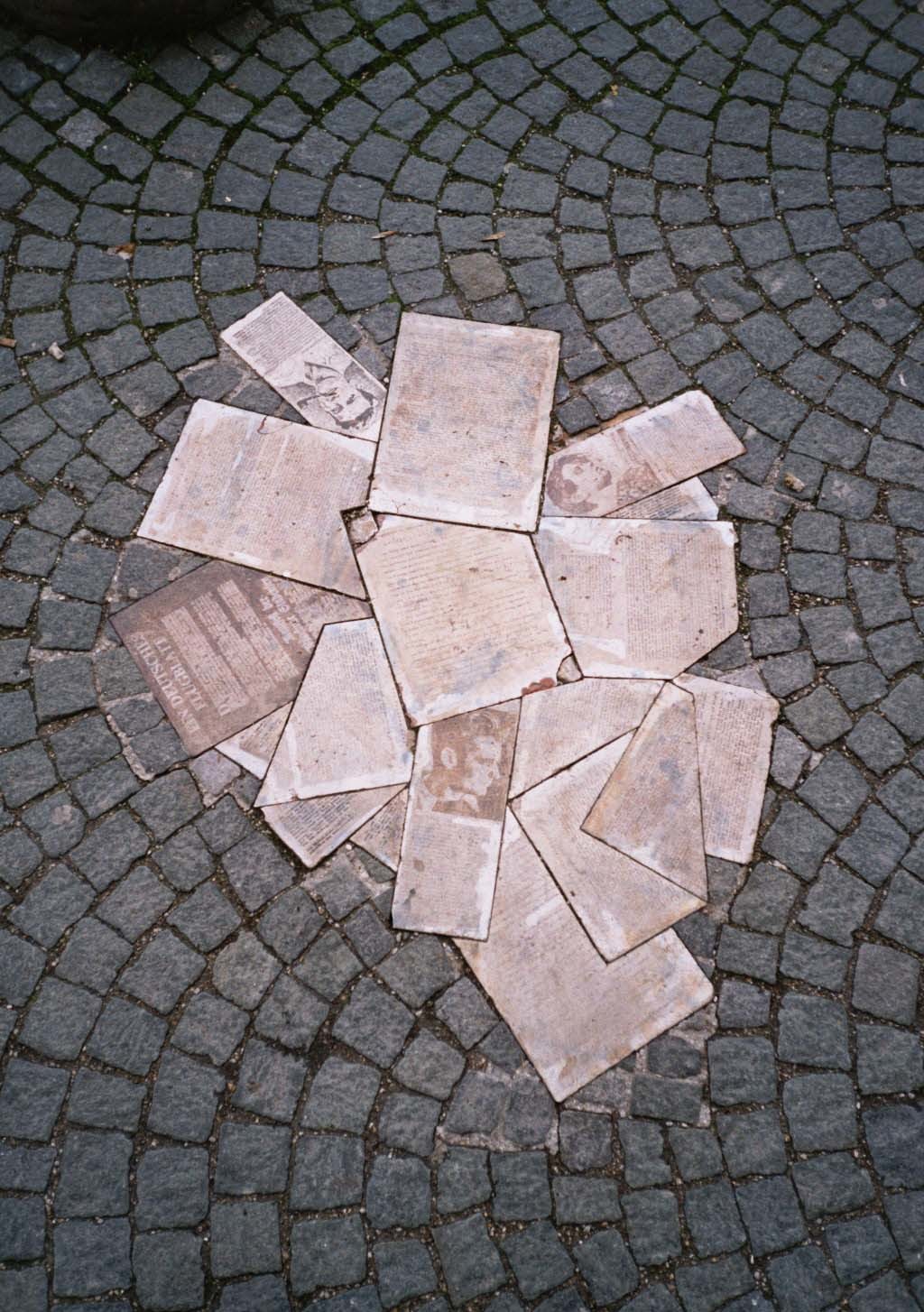
Monument to Die Weiße Rose resistance
movement, at the University of
Munich, Germany. Public Domain.


    So, a few months ago, I started building a timeline of WW2 events that I could connect to each chapter of Biscuit. When I could, I used resistance activities because they further an important theme of the book. Anyway, I came across the White Rose (Weiße Rose) resistance group at the University of Munich, and damn ... those were some courageous, heroic people.

    Anyway, Germany is a sort of boogieman-type villain in Biscuit (hard to write a book about an ethnically/culturally Jewish family in WW2, where Germany doesn't look pretty bad). But in this situation, there's not a whole lot of opportunity for nuance. It doesn't help that most of Arthur and Roma's interactions were with Germans in enforcer-type roles. Soldiers at roadblocks. Gestapo investigating sabotage, soldiers chasing down illegal refugees.
So when I found opportunities to make the portrayal of Germany a little more complex, I took them. One was to use the White Rose group as part of my timeline, and the other was to have a German POW show genuine remorse for his actions, and also explain why he couldn't dodge the Wehrmacht draft, despite holding anti-Nazi beliefs.

    Anyway, back to the White Rose. One of the members was a young woman named Sophie Scholl. She and her brother Hans were executed by the Nazis for distributing anti-Nazi leaflets for the White Rose, but after her death in 1943, Germany has never forgotten her:
  • They placed a bust of her in the Wahalla Memorial.
  • There are streets and squares named for the Scholls all over Germany.
  • In 2003, Sophie and Hans placed fourth in a poll of the most important Germans, beating out Einstein, Bach, Gutenberg, etc. If only the votes of young Germans had been counted, the Scholls would have placed first.
  • There have been several German TV shows and movies telling the story.
The transcripts of the Scholls' interrogations resided in East German archives until the 1990s. After reunification, the transcripts came to light, and one filmmaker used those as primary sources, along with survivor testimony, to write the screenplay Sophie Scholl – The Final Days (Sophie Scholl – Die letzten Tage). The movie was released in 2005, was nominated for and won numerous awards, and I'm planning to watch it in a few weeks:


Tuesday, January 27, 2026

1939: Schopenhauer's Cheap Pride

Arthur Schopenhauer
By Johann Schäfer - Frankfurt am Main
University Library, Public Domain.

    There's this thing that happens, where I come up with an idea that I think is just dandy, smart, and incisive, and then I find out someone else came up with it long before I did.  [Big, gusty sigh]

    A few weeks ago, I rewrote the third chapter of Biscuit, and, in an attempt to understand why the Germans supported Hitler, I wrote the following scene between my Grandma Roma, great-grandmother, and great-aunt:

    There was a lull, and then her sister asked with quiet befuddlement, “I don’t understand what the Germans see in him. He’s a sweaty little man with a tiny mustache and a bad haircut that flops into his face.  And he shrieks up on that stage like he is having an apoplexy.  In his letters, has Kuba ever said anything about why people like Hitler?” 

    Roma nodded.  “Jake says it’s because Hitler offers them cheap pride at a time when… how did he put it? Oh. Yes. When they were jobless and starving for empty dignity.”

    “Cheap pride?” Lola asked.

    “You know how people naturally take pride in things they work hard for?” When Roma saw that her mother and sister understood where she was going, she continued. “Well, what if you have nothing like that? No job, nothing to work for, nothing to point to that’s worthy?”

    Teofila put it together first. “Hitler gave them something easy to be proud of, didn’t he? Maybe the only thing in their life for which they never had to struggle.”

    “Yes, Mama,” Roma answered. “You don’t need any personal accomplishments, nor even useful skills.  All you have to do is be born Aryan.”

    Lola finished the idea. “And if you weren’t born Aryan, well then, tough luck.”

    The women were quiet for a long time.


    I was really proud of my cheap pride concept.  Germany had been harshly punished for WW1, and the Great Depression hadn't helped matters. Between the reparations and the mass joblessness due to the depression, the people were desperate for something to believe in.  I have always felt that the Treaty of Versailles, which pinned the fault for WW1 on Germany, is what led to the rise of Hitler and the cause of WW2.

    Then, today, the following quote by the German philosopher Arthur Schopenhauer came across my Facebook feed:

“The cheapest sort of pride is national pride; pride in his own nation suggests he has no qualities of his own for which he can be proud, otherwise he would not reach for what he shares with so many millions of his fellowmen.  He who possesses significant personal merits will see clearly the ways in which his own nation falls short, since its failings will be constantly before his eyes. But that poor beggar who has nothing in the world for which he can be proud, as a last resort, latches onto pride in the nation to which he belongs, and is ready and glad to defend tooth and nail, all of the nation's errors and follies, thus reimbursing himself for his own lack of accomplishments."

—Arthur Schopenhauer, 1788-1860

    Well, okay, then.   Looks like I didn't come up with the idea first; Schopenhauer did, more than 100 years before I was born. [Another big, gusty sigh].  I suppose I shouldn't be surprised, though. The Ecclesiastes principle states that "there is nothing new under the sun," and Mark Twain might have said, "There is no such thing as a new idea. It is impossible. We simply take a lot of old ideas and put them into a sort of mental kaleidoscope."   While I might not have come up with the idea first, this does tell me that human nature doesn't really change.


Wednesday, January 7, 2026

1939: Cost-Benefit Analysis and the Tiffany Problem

Apologies to Ms. Darwish for irrelevantly
using her excellent album to refer to a literary concept

    I was first alerted to the Tiffany Problem (TP), but didn't encounter it in my own writing until last night, when a writer's group workshopped a chapter from Biscuit for me.   

    TP refers to a situation in which the modern audience perceives a name, word, or concept as too modern, so that its use in the text seems historically inaccurate, even if it is not actually anachronistic. In other words, it's something that is incorrectly assumed to be a goof (to use IMDb terminology). 

    The origin of the phrase arises from the idea that Tiffany was a hugely popular name in the 1980s, and so people assume it is modern, when the name is actually quite old (it's a nickname for Theophania, which dates to medieval times). The first recorded example of Tiffany as a girl's name spelled with a -y dates to the 1600s.

Here are the two examples from my writing, and they are from a scene taking place in 1939:

  • She was planning to quit her job when the baby came, and then they’d have no financial cushion at all.
  • As he always did when making a big decision, he did a cost-benefit analysis. He quickly drew a two-column table on his scratch pad and filled it out.

    In the interests of fairness to my readers, I didn't know the history of either phrase before last night.  When they brought it up, I suspected cost-benefit analysis (CBA) was historically accurate, but that's all it was, a suspicion. And I never even thought about "financial cushion." I used both phrases because I didn't think to separate my vocabulary from that of my characters.

    Financial cushion really is a problem - while the term "cushion" has been used figuratively to mean "protective buffer" for a long time (back to the 1800s, possibly earlier), the word "cushion" used in conjunction with "financial" first started appearing in print in the 1940s and 1950s.  It began appearing in official documents in the mid-1960s but didn't come into common use until the latter part of the 20th century.  While it's not impossible in 1939 (word usage always starts before the historical record, which is just when it was first written down), it's definitely improbable. I'll probably just remove the word "financial" (or look for similar period-accurate phrases).

   CBA, on the other hand, is definitely a Tiffany. The concept was first played with by French engineers in the 1700s. A French civil engineer named Jules Dupuit (the guy who helped build the Paris sewer system) pioneered the modern approach in 1844 (though he called it "the measurement of the utility of public works"), and an English economist standardized and formalized it by the late 1800s. The phrase was in common use in English by the 1930s (the practice and term were regularly used in President Roosevelt's WPA projects), and CBAs became part of American federal policy by 1939.  

    Interestingly, despite its origin as a French concept, the modern French version of the phrase, analyse coûts-bénéfices, or sometimes analyse coûts-avantages, didn't go into common usage until the 1950s. So the concept had been well-established for nearly 100 years by the time my story takes place. The cognate was in common use in English but less commonly in French. And given its origin as a French engineering term, I suspect that its use by a French-speaking engineer in 1939 is downright likely.

    The thing is, even though the use of CBA isn't really a goof, it might still be a problem if it yanks readers out of the world of the story.  

    It raises the question of what my role as a storyteller is. On one hand, it's not my fault when readers lack an encyclopedic etymological understanding of every possible phrase I might use.  On the other hand, a good writer immerses her readers in the world of the story, and it would be foolish not to minimize stimuli that yank readers out of that world.

    This is where decision-making gets hard.  My grandpa was an engineer, and I want his story to seem like it's from an engineer's point of view. Using engineering terms that are also in common use just makes sense to me.  But at what cost? (Ha! See what I did there?)

Thursday, November 27, 2025

June 1944: Killing a Kübelwagen - v5

    One story my grandfather told more than once was about the non-commissioned officer in his Maquis unit who, through a spectacular bit of sharpshooting, shot the driver of a Kübelwagen (German equivalent to a jeep) that contained the commanding officer of a German unit. The car wrecked, killing all three men inside.  

    I have two versions of the story from my grandfather (from 30 and 44 years after the events), one from the son of his commanding officer (written in 1955), and one from a non-fiction book. You can read all four of those versions here.

    A couple of days ago, I found what is very likely a fifth version.  One that contains the names of the Germans killed in the wreck.  Certain details match up - The date (June 28, 1944), the fact that there was a German convoy, and that the German commander was killed when the car was destroyed, and the location (Ourches valley, on the way to La Rochette-sur-Crest).  But other details vary, like the weapons used (gun, hand grenade, sticky bomb), and the vehicles used. But, here it is, written by Nick Beale:

Obltn. Stefan Ulrich, in La Rochette, 2 km S Ourches, (no time or cause stated).Uffz. Aloysius Hennecke, at 10.00 hrs. in La Rochette, multiple injuries from an “adhesive charge” (a Gammon Grenade?).Ogefr. Werner Gaudigs, in La Rochette (no time or cause stated).

That three men of a motorised unit were killed and that a “sticky bomb” was involved suggests an attack on a vehicle or vehicles and Resistance historian Joseph La Picirella has written that a convoy of 10 trucks from Valence, each carrying a dozen men, was attacked by the Maquis en route to La Rochette-sur-Crest. He says that the vehicle carrying the detachment commander was destroyed and the bodies of the occupants were taken to the house of the mayor. This account seems to fit what is known of the deaths of Gaudigs, Hennecke and Ulrich (whose rank may mark him as the commander of the operation). The mayor of La Rochette, Paul Baude, later certified, “that on the 28th of last June the old village of the commune was burned by the Germans by means of incendiary bombs without the inhabitants being able to remove their furniture”.

    I've found independent verification of what happened to the bodies (taken to La Rochette mayor's house, and the reprisals). Now I need to find Joseph La Picirella's writings.  Pretty cool, to find more verification!

Sunday, November 23, 2025

All cemeteries in France are publicly-owned

Cimetière de Ourches


    Well, not private family cemeteries, but all of the others. 

   Every once in a while, I discover a significant cultural difference between the USA and France that catches me off guard.  This is one of them.

    All cemeteries, even ones that historically belonged to the churches, including those in attached church yards, are owned and maintained by the municipalities.

    This has been true in France since the 1905 law separating church and state, which transferred ownership and maintenance of cemeteries to the towns and cities.  This was to ensure that cemeteries remain secular, and that no one would ever be denied burial due to their religion.  Churches were granted exceptions to the law, allowing them to use cemeteries (i.e., public spaces) for religious purposes.

    It's a little weird to me - evidently, most USA-ian cemeteries are municipal, too, but plenty are owned by the churches, particularly when the cemetery is in the attached churchyard.  There has never been a time in my life in which Americans wouldn't totally lose their shit if their local church cemetery were confiscated and given to the town.   So that makes me wonder how the French populace responded back in 1905.  Don't get me wrong - I have no issue with how the French administer their cemeteries - it even seems like it might be a good idea, particularly in a country with centuries of historical conflict between catholics and protestants. It's just not what I'm accustomed to.

        So, the walled cemetery in Ourches, where my grandfather stood guard for a night in June of 1944 (panicking because he couldn't remember how to arm his gammon grenade), had TWO gates, one for Protestants and one for Catholics.   

    I had assumed it belonged to a nearby Catholic church, Église Saint Didier, which is a few blocks away. Evidently, the church dates to medieval times, so I figured the land that the cemetery sits on had belonged to the church, and that over time, the land between the two was sold, hence the separation in location.   So I had called it "Cemetery Saint Didier." But something bothered me about that: the cemetery doesn't seem to have an official name (it's just labeled "cimetière" on Google Maps, and none of my internet or AI-assisted searches gave it a name). So I did some digging (the results of which are above), and found out that "Cimetière de Ourches" is more probably correct.

Glad I looked it up. :-)

Sunday, October 12, 2025

1941: The Valence Beat Cop (Deleted Scene)

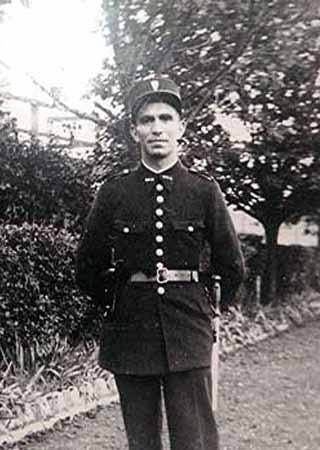
Henri Mosmeau, Paris Police, and a member of the Resistance.
He died in 1944, defending Paris against the occupiers.
Source: France24

    As I've studied WW2-era France, I've noticed a curious trend, a divergence of sorts between two classes of police officers:

  • Group 1: Collaborators.   Police officers tend to favor law-and-order, and are often comfortable enforcing tighter restrictions. They do their job, regardless of who they are working for.   The French police forces were responsible for rounding up a LOT of undesirables so they could be sent to detention camps, and this group absolutely helped carry out the Holocaust.
  • Group 2: Resistors. There were a few who did what they could to help the Resistance, including warning the different units of impending raids.  As far as I can tell, this group was far smaller than the above, but they did exist.

    Really, there was a third group, probably the single biggest:  they did what they were told, but didn't like it. They knew it was wrong, but not knowing what else to do, they did their job anyway. I tend to include these men with the first group, because even unenthusiastic collaboration caused serious harm when the collaborator was in a position of power. 

    I wrote a scene that was intended to be a tribute to the second group, the police officers who did what they could to protect the people from Vichy or Nazis abuses, often at the risk of their own lives. I imagined this man later helping people join my grandfather's maquis unit, and sending them intelligence when he could.  It's a good scene, one I intended to be funny, but it no longer fits in the book (they would have arrived in the afternoon, not in the wee hours as depicted below).   

    Anyway, here's the scene:

    Arthur shook Roma awake, and they sleepily stumbled off the train in Valence.

    Too tired and cash-strapped to look for an inn, they found an unoccupied bench at the train station and made themselves as comfortable as possible. Arthur removed his shoelaces and used one to tie his briefcase to his wrist.  He shoved the suitcase under the bench and tied the handle to his ankle.  Then they covered themselves with their coats, and he and Roma fell asleep cuddled together, Liliane on Arthur’s chest.

    Something tapped Arthur’s shoe.  Arthur ignored it.  Then whatever-it-was smacked his shoe again, hard enough to hurt.  Arthur woke up and found a police officer standing over him.  Arthur jumped to his feet, nearly catapulting Liliane off his chest before Roma snatched the baby from him, which she did as neatly as if they had practiced the maneuver.

    “Yes?” he said as politely as he could, trying to keep his balance with the suitcase tied to his ankle and briefcase dangling from his wrist. He felt both frightened and utterly foolish.

    “You can’t sleep here. This isn’t a hotel.” The policeman was obviously trying not to laugh.

    Arthur took advantage of the man’s mirth and gave him an embarrassed smile. “Yes, I am sorry. We got in at 1:30, and nothing was open. We will not be staying.”

    “Best untie yourself before moving on,” he said, grinning slightly. “Clever idea. Ridiculous, but clever.”

    “Uh, thank you. And yes, I will.”

    “The markets are starting to open,” the officer added, “if you want something to eat, you should go early.”

    Arthur glanced at his watch. It was now five-thirty, and there were a few early morning travelers milling around.  “Oh, good.” He sat back down and untied his luggage, and re-laced his shoes.   When they stood, the policeman wandered off, though he kept an eye on them as they left the train station.  

Saturday, October 11, 2025

1947: La Guardia, not Ellis Island


    I've always known I came from immigrant stock. I mean, it's kind of hard to miss when your grandparents had a name like Lubinski, spoke 3 languages, and had an accent.  I think I was 10 before I realized that when Grandma Roma said très bien, she wasn't actually speaking English. I knew what she meant.

    I'm not sure when I realized they were also refugees, Holocaust escapees, and that they went through something so terrifying, so traumatic, they rarely talked about it.  No, not the concentration camps, though they had relatives who survived the camps. And relatives that died in them, too. My grandparents survived by hiding.

    Anyway, I grew up assuming that they had gone through Ellis Island, which has a certain romanticism. However, when my grandparents and their older two daughters (one of whom is my mom) came here, they did so not by ship, but on an airplane.  They flew into LaGuardia Airport in New York City, decades before JFK was built.

    They had intended to take a ship across the Atlantic, specifically the SS Île de France. They had booked passage and everything, but then the French government requisitioned it as a troop transport for the war in Indochina. That one surprised me, because I hadn't realized that the roots of the Vietnam War reached so far back.  

    The ship wore many hats: a luxury ocean liner, a prison ship, a troop transport, and a movie set.  The women of the 6888th Central Postal Directory Battalion took the ship from the USA to England during WW2, and from what I can tell, it was more prison ship than luxury liner at that point.  In the late 50s, it was purposely sunk during the filming of a disaster movie, refloated, and quietly scrapped.  

    Anyway, my grandparents had to scramble to find alternate transportation and eventually got airplane tickets.  My grandmother was terrified to fly; for the 2.5 months before they left, Grandpa snatched the newspapers before Grandma could get to them, skimmed the papers for stories of crashes, and cut them out so she wouldn't see them.   I have no idea what he told her, or even if there were any airplane crashes at all during that time, but there you have it.

    So they went through customs and immigration not at Ellis Island, but at La Guardia Airport, and I imagine they were grateful to be on the ground again (my aunt was 6 1/2 years old, my mother was 14 months old, and I understand that both girls cried a lot, so I'm sure it was a flight from hell).  

    And when they emerged from customs, my grandmother's brother was waiting for them. I imagine it was a bittersweet scene.

Thursday, September 11, 2025

May-June 1940: The Exodus in a Peugeot 402 Longue/Familiale

     As I mentioned earlier, the taxi my grandparents used to escape the invasion of Western Europe might have been a Volvo PV 802, which, according to an internet source I found somewhere, was the more likely candidate out of the two possible models, so planned for the taxicab to be a Volvo.

    Well, I've changed my mind.  I've decided that the other possible model, a Peugeot 402 Longue (long), also called a "familiale," is the one I'm going to go with.  Here is why:

Peugeot 402 Familiale retrofitted with a wood-gas generator.

According to Wiki:

    In 1939 Peugeot were already investigating the adaptation of petrol/gasoline engines to run on gas created by the controlled burning of charcoal. The technology would prove particularly suitable for the long bodied Peugeot 402 ... On the car it was possible to fit the necessary components without excessive modification of the bodywork. A charcoal burning boiler, able to accommodate 35 kg of charcoal, was mounted on a stout platform at the back of the car. This provided sufficient power for approximately 80 km (50 miles) before more charcoal needed to be taken on board. The controlled burning of the charcoal produced carbon monoxide, known as gazogène, which was captured and transferred in a stout pipe mounted on the outside of the right-hand C-pillar to a roof mounted gas tank. From there another stout pipe mounted on the outside of the right hand A-pillar drew the gazogène down to the engine. Between 1940 and 1944 more than 2,500 Peugeots were equipped with a gazogène fuel system.

    My grandfather helped develop that very fuel system!  On a memorial page to him, it says, "Before World War II he worked on the development of devices generating motor fuel from coal," and I took that to mean he worked on Coal Liquefaction technology.  But when I looked back at a copy of his CV, I found the following: "In his first job, he worked on the development and manufacturing of a gas generator used in wartime for the propulsion of civilian buses, trucks, and cars. Gas, produced in the generator from coal, charcoal, or wood, was used in conventional internal combustion engines."

    Gazogène fuel systems, also known as wood-gas generators, burned wood or charcoal, which creates a producer gas, a mixture of nitrogen, carbon monoxide, hydrogen, and methane. It's filtered and then piped into an internal combustion engine. But you could run a car for about 50 miles with 80 pounds of charcoal. Not very efficient, but better than nothing in a world without gasoline.

    When writing stories, you try to reuse characters and themes as much as possible to create an interconnected world. This model of car was particularly well-suited to a wood-gas fuel system, and when installing the system, Arthur would recognize the car where he spent two miserable weeks of his life.  It's a connection, not between people, but between artifacts

    Anyway, here's a video that thoroughly explores a 1936 model (it's in German, so if you don't speak the language, you can leave the sound off). Just skim through it to see the interesting bits, including how the jump seats fold down from the back of the front seats. You'll also notice there's a lot of leg room without them, but almost none when they are in use.   It shows the gas tank, the trunk space, and even how you access the engine compartment (the panels lift up on either side of the engine like gull wings).   


Monday, September 8, 2025

1939: Teofila's Brooch

Source: DropofDifference. Used with permission.

 My great-grandparents on my mother's side lived in a very similar manner. They also owned vast amounts of land, which was cultivated by tenants.

--Liliane Lubinski McCullar, 1955

    I grew up hearing stories of my great-grandparents, who had been very wealthy, but lost nearly everything (I think) during the depression that followed the stock market crash of 1929, and what remained was confiscated after Poland was invaded by the Nazis in 1939.  But there is family lore about my great-grandmother Teofila's brooch, a bit of inherited wealth that she held onto as long as she could. Supposedly, it had two big diamonds and many small diamonds.  

    Anyway, her son Jakub was a brilliant student, a mathematical prodigy, and he wanted to study physics and engineering, but wasn't allowed to study at the University of Poland due to the racist numerus clausus policies implemented across the nation.  But Teofila's husband, my great-grandfather Isak, was opposed to Jake leaving Poland. She didn't agree, and to fund their son's travel and living expenses for his studies at the University of Brussels, Teofila sold one of the big diamonds without her husband's knowledge.  

   When Isak found out that his own wife had given Uncle Jake the means to leave, Isak got so angry that he hurled a big ring of keys across the room, smashing a bunch of glassware in the process.  My grandma was present; Roma was their youngest child, and she would have been about 12 years old at the time. Grandma told us later that she had never seen her father act with such violence before. She (understandably) found it pretty scary.

    Then, around 1928, when Uncle Jake wanted to get an advanced degree from a school in the United States, she sold the second big diamond to send him to America. That's why he was able to ride out the war in the United States (he became a citizen in 1942) while the rest of the family was trapped in occupied Europe.

    We know what happened to only one of the smaller diamonds. It wound up in my Grandma Roma's possession, and she brought it with her to the United States in 1947, and wore it on a ring. I don't know for sure when her mother gave her the diamond, but I think perhaps it was during Roma's last visit to Teofila in Łódź in late August 1939, just days before the invasion of Poland.  We don't know what happened to the rest of the small stones. Did she give them to Roma, who was pregnant at the time? Or did she use them to buy safety for herself, her husband, and her oldest daughter, Lola?  Or were they just confiscated by the Nazis?

    Anyway, I do my best written descriptions when I can SEE the item I'm describing, and in this case, I imagined a glammed-up snowman (or figure 8) surrounded with diamonds like an aura, and that struck me as being quite ugly.  I also had no idea what jewelry styles from the 1800s even looked like, so I did some internet searches ("vintage brooch two big gemstones surrounded by small gemstones") for a piece of vintage jewelry to use as a model for Teofila's brooch, because the sparkly snowman design just wasn't doing it for me.  I eventually stumbled on the one in the picture in an Etsy listing.  It's massive, about 3.5" (8 cm) tall and 2.6" (6.5 cm) wide, and it is almost certainly much larger than Teofila's actual brooch, as the remaining small diamond was much smaller than the ones shown.   

Source: DropofDifference. Used with permission.

    The Etsy listing describes it as an antique setting from the 19th century (Georgian/Victorian), a sterling silver and quartz brooch. You can see more pictures here (many thanks to Marie from DropofDifference for granting me permission to use her photos).

    I imagine Teofila would have sold the bottom diamond first (because she could have the entire dangling part removed, and it would still be a nice brooch) to send Jake to Belgium, then the big central diamond to send him to the United States.  I like to think my great-grandfather changed his mind about the wisdom of his son leaving Poland. Isak and Teofila Najfeld died in 1942, but I imagine they were glad that at least one of their children was somewhere safe.

Thursday, September 4, 2025

Spring 1942: The Miller's Tale (deleted chapter)

     Then, at nighttime, the grain which I got, I put in a buggy, which I pushed myself, a couple of miles to the mill. The mill was a water mill, and the miller took half for himself, and half he gave back to me in form of flour.

--Arthur Lubinski, 1988

    As I write (and in this case, re-write) the book, I try to imagine what the mill and miller were like. I read up a little on water mills, and I found myself totally geeking out about how they worked.  And if I geeked out over this ancient technology, then I'm certain my grandfather would have, too.

    However as much a I love this scene, it doesn't move the story forward (like at all) so I killed off my darling (an intimidating miller) and his super cool mill.  Enjoy.


The Fountain Mill in Beaumont-lès-Valence

The Miller's Tale

    Very late Saturday night, he loaded the winnowed grain, which now filled the big bucket and was quite heavy, into Mr. Durand’s cart and took it to the miller.  The mills were monitored too, but less stringently.  Perhaps because flour was more perishable than grain?  

    Mr. Durand told him that the miller ground the illegal flour at night, and to avoid suspicion, he also regularly ground legal flour at night.  

    When he got close to the mill — he could hear the river — he left the cart in a small stand of trees and, trying to be surreptitious, approached the mill.  The lights were on, and the wheel was turning, though he realized that did not necessarily mean the mill was in use; a gear inside could probably be engaged or disengaged to turn the millstones. He walked in a wide circle, looking for signs of surveillance but saw none.  He picked up the bucket, lugged it to the mill door, and knocked.  

    The miller opened the door.  He was a big man, but unlike most Frenchmen, he was merely trim and not skinny. He was dressed plainly, wearing an apron over his work clothing. He looked at Arthur and waited for him to say something.  When Arthur did not speak, he finally asked, “You have some grain?”

    “Yes.”

    “Well, bring it in.”

    Arthur carried the heavy bucket inside and set it down.  He gazed at the huge stone wheels at the room’s far end.  There were two, one stacked on the other, with a metal shaft rising from the stones and into the floor above, and a second, massive wooden shaft stood next to the millstones, extending floor to ceiling.  

    Before the miller started on Arthur’s grain, he explained the rules. “I take 50% of whatever I grind illegally.”

    Arthur stopped looking at the millstones and gave the man his full attention.

    The miller went on. “Yes, I use it to keep my family well-fed and comfortable because they are more important to me than anyone else in France, and in these Godforsaken times, I should be well-paid for the risk.”

    Arthur was not accustomed to such plain speech about dangerous activities, particularly from a stranger.  Having no idea how to respond, Arthur simply nodded at what he hoped were the appropriate times.

    “The leftover, however, I give to the very hungriest of people. It is in your best interest to never tell anyone what I am doing for two reasons: One, word gets around, and no one else will grind grain for you, and two, because there will be reprisals.  I feed many people, and they will be … disappointed if their flour source disappears.  Do I make myself clear?”  The miller stepped slightly closer and stared into Arthur’s face.

    Arthur was intimidated, which he knew had been the miller’s intent. “Very clear, yes. I have no intention of talking about you to anyone.”  Arthur also realized that the man was risking his life, so perhaps his threats were appropriate.

    “Good. Nice to meet you.” The miller stuck out his hand. 

    Arthur realized that the handshake was not just a greeting but a promise, an agreement.  He shook the miller’s hand.

    After releasing Arthur’s hand, the miller hooked the bucket’s handle to a chain hanging through a trap door in the ceiling and hoisted it up through the opening. He then climbed a ladder to the floor above. 

    He could hear the miller dump the grain all at once into a hopper, which he guessed was metal from the sound.  The miller descended the ladder to the basement, where he apparently engaged a gearing mechanism, and the upper millstone began to turn.  “May I come down to see the machinery?” he called.

    “Of course!” the miller answered from the floor below.

    Arthur climbed down and found the miller affixing a flour sack to the bottom of a chute.  Arthur examined the system of gears and grinned. It was ingenious. He knew from his studies that the Romans had designed the apparatus two thousand years ago. Modern engineers had merely improved it.

    The miller caught Arthur’s smile. “I see that you admire it.”

    “Yes. I am an engineer. We studied the technology a little at University.”

    “Then you’ll be interested to know that 20 years ago, I converted it from a breast shot wheel to a backshot, which increased the efficiency from 50 to about 90%.”

    “You are an engineer, too?” Arthur asked in surprise. 

    “No. I studied engineering for a year, though. My father wanted me to finish, but when he got too sick to run the mill, I came home.  But, I’m smart enough to know a good idea when I see one.”

    Flour started pouring down the chute and into the flour sack.   When the grinding was complete and no more flour came out, he disengaged the gears. He carried the flour to a set of big scales and removed half, which he dumped into a barrel.  He handed Arthur the sack of flour. “Save the sack for next time. Supplies are limited.”


Tuesday, September 2, 2025

May-June 1940: Eight People and one baby packed like sardines into a Volvo PV 802 taxicab

    I rented a taxicab – and in the taxicab, big taxicab: Roma and myself and the baby Lillian, a few days old, and my father and my mother, and Felicie, who was like family, and in addition, the cab driver and his wife and a child, were all squeezed in one big taxicab.

--Arthur Lubinski, 1988

    During the 1940 Exodus, my grandparents escaped the invasion of Western Europe in a taxi, traveling from Brussels to Montreuil-sur-mer, a trip that normally took three hours, but took them 2 weeks.  Most refugees were on foot or bicycles; cars, while there were enough of them to clog the roads (particularly after being abandoned due to lack of fuel), they were comparatively rare.  However, my grandfather had several serious issues to deal with: his wife was one week postpartum, his father was elderly, and his mother was late middle-aged and had tuberculosis.  I imagine that he felt there were only two choices:  either stay in Brussels as it fell to the Nazis, or find transport that would allow them to ride.  They took the second option, but probably should have taken the first, given that they ended up returning to Brussels six weeks later.

    Anyway, they needed an eight-seat taxi: seven adult passengers and one child (plus a newborn, but she rode on my grandmother's lap).  There weren't that many taxis in 1940 that carried 8 passengers. There were a few American models that did, and a few of them were imported (primarily to southeastern Europe), but they were uncommon in Belgium and France.  I did find two eight-seat European models, though: the Volvo PV 802 and the Peugeot 402 Familiale.  Both are essentially six-seaters, but with additional seating that could fold out as needed.

    Of the two models, research suggests that the Volvo was perhaps the more likely vehicle. The pages I looked at didn't explain why it was more likely, but I'm going with it. (Added: I changed my mind and am going with Peugeot).

Click on any photo to enlarge.

The Taxi:

1938 Volvo PV802. Volvo Museum. Photography by Serhii.
See the end of the article for more pics of the car.

    It had two large bench seats (front and back). The foldable jump seats were situated between the two rows of seating, and could be tucked away when not in use (though the legroom surrounding the jump seats must have been minuscule).  It was also designed to be a small ambulance - the right side of both bench seats could fold down, and a stretcher could be loaded through the trunk.  (If you are interested, there are more photos of the taxi at the end of this article.)

    Note: Belgium didn't have standard taxi colors in the 1940s. It could have been any color.

The Travelers: 

    This little band of travelers spent about six weeks together, first on the road, then as refugees on a dairy farm in Montreuil-sur-Mer, France.

    First, we have the taxi driver, his wife, and their child. Their names have been lost. I know they existed, but I have no idea who they were or what happened to them after they returned to Brussels in June of 1940.  I named them Marc and Violette D’Abruzzo, and their 9-year-old son Robert.

    But the rest of the people in the car were my family (photos from their Belgian naturalization files):


Great-Grandfather Herman Lubinski,
circa 1926.

    The 63-year-old Herman was a businessman who owned his own agricultural commodities trading company. He was resourceful, but he did a poor job of planning for the future, spending money freely when he was flush with cash, only to face periods of complete financial hardship when he ran out of money.   Eventually, (in 1941 or 1942), his business was seized, and he was imprisoned in Breendonk concentration camp, but he miraculously escaped (!?!) and survived the war by hiding in a retirement home.  

Great-Grandmother Micheline (Mascha) Lubinski,
circa 1926.

    The 58-year-old Mascha Lubinski was a highly intelligent woman who led salons in her home, inviting philosophers, artists, and scientists to discuss the great topics of the day.  My grandfather was very close to his mom and credited her with making him the generous, ethical, and hardworking man that he became.  She contracted tuberculosis at some point and survived the occupation by feigning mental illness and hiding in an asylum.


Félicie Turska, circa 1931

    Félicie Turska, aged 46, served as a housekeeper for Herman, who fell in love with her.  He married Félicie after Mascha's death. I think she was a lovely woman, but she looks high as a kite in the photo.  And my great-grandfather Herman must have had real chutzpah to travel with both his wife and his lover in the same taxi. Can we say tense and awkward?

    Interestingly, Herman's sons (by his first wife), Arthur and Paul, had different attitudes toward Félicie. Arthur resented her for her relationship with Herman, while Paul seemed to have accepted her as his stepmother, and my cousins in Belgium tell me she was very kind and that she was the only grandmother they ever knew.  


My grandparents, Arthur and Roma Lubinski
at the time of their 1935 marriage
   
    Ohmygod. My grandfather's hair!!! It's so ... tall!  Even before he lost his hair, he kept it short and much neater than in this photo (according to the family album, anyway).  


1938 Volvo PV802. Volvo Museum. Photography by Serhii.


1938 Volvo PV802. Volvo Museum. Photography by Serhii.
Note the rear luggage rack (most didn't have that) and the dinky trunk.

Friday, August 29, 2025

May 1940: L'Exode (The Exodus) or "The traffic jam from hell"

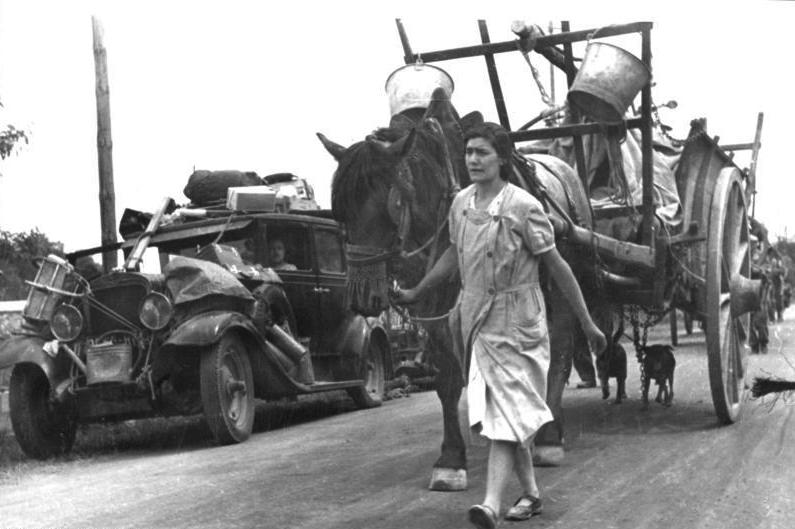
French refugees on the road of the Exodus, 19 June 1940, near
Gien, France. CC-BY-SA 3.0.
This photo was taken by a German soldier.

    Between May 10, 1940 when the Germans invaded western Europe, and the end of June, when France surrendered, a massive migration, one so biblically enormous, it was given the name l'Exode (the Exodus) in France.  

    The 8-12 million affected people were a mixture of refugees from Belgium, Luxembourg, and the Netherlands, but also internally displaced persons (IDP) from within France itself, and they all had the same goal: to get farther from the front, to find safety.

    Regardless of nationality, people sort themselves into three groups in tense situations: 1) the exceptionally good people who rise above the situation and try to help those around them; 2) the genuinely bad people who heartlessly take advantage of the desperation of others; and 3) everyone else, the desperate masses who just do what they can to survive.  This last group is massive, usually comprising over 90% of the participants. 

    It's hard to capture what the Exodus in 1940 was like, and hell, it's hard to even imagine it. Millions of people were on the road, stuck in a traffic jam from hell that lasted not hours, but weeks.  People were on foot, on bicycles, in horse-drawn carts, or in automobiles.  But mostly, they were on foot.  The average speed was 1-3 miles (2-5 km) per hour.

    There was a heatwave, and there wasn't enough food, water, or fuel. There were no sleeping arrangements, showers, or even toilets.  People were packed closely together with their dogs and horses, and surrounded by clouds of automobile exhaust.  The smells must have been intense.

    There were constant threats of crime, violence, and chaos. People were beaten for their food. Women were raped. Children were occasionally separated from their parents (sometimes permanently), and war profiteers charged people exorbitant fees for sips of water, and a simple sandwich might cost a week's wages. 

    And the Luftwaffe and their dreaded Stuka dive bombers made a habit of not just strafing Allied soldiers, but columns of refugees as well. There are a couple of scenes in the 2017 movie Dunkirk that show what it was like:


    Note: that weird high-pitched whining sound that sounds like an anvil dropping on Wile E. Coyote's head (link to short clip that includes the soundwasn't an air-raid siren, nor was it an artifact of the Stuka engine noise. Rather it was psychological warfare in the form of ram-air sirens mounted on the Stukas themselves.  They were called "Lärmgerät" (noise devices) but despite popular myth, they were not really called "Jericho Trumpets" (which is what I think the whistles on bombs were called).  Most common was probably "Stuka Siren".

    My grandparents and great-grandparents joined the Exodus of 1940. And they did it with my newborn Aunt Lilly, my grandmother, who wasn't producing enough milk (probably due to terror and the deprivations of the trip itself), and my great-grandmother, who suffered from tuberculosis.  My grandfather told me about the taxi he hired (but not how they avoided running out of fuel), about the traffic jam, but not how long they were on the road, about who he took with him, but not about their misery.  He summed up the experience in a single word: pathetic. I think he was describing not just the stasis of the troops, but how he and his family felt.


     So after Lillian was born, and as soon as we could move – I didn’t have any car at the time, so I rented a taxi cab – and in the taxi cab, big taxi cab: Roma and myself and the baby Lillian, a few days old, and my father and my mother, and Felicie who was like family, and in addition the cab driver and his wife and a child, were all squeezed in one big taxi cab. We started escaping from Brussels. 

     Well, you couldn’t do more than ten miles a day at most, because the highway was crowded and millions of people who remembered the war – the first World War, 1914 to 18 ... So they wanted to escape and be on part of France where the front would never arrive.  So millions of them were moving; including fire trucks with people on it. And including ambulances with people on it; etcetera, etcetera. Completely packed by millions of people. And English and French and Belgian troops couldn’t move because of the civilians packing the highways.

     It was pathetic.

--Arthur Lubinski, Oral Testimony, 1988


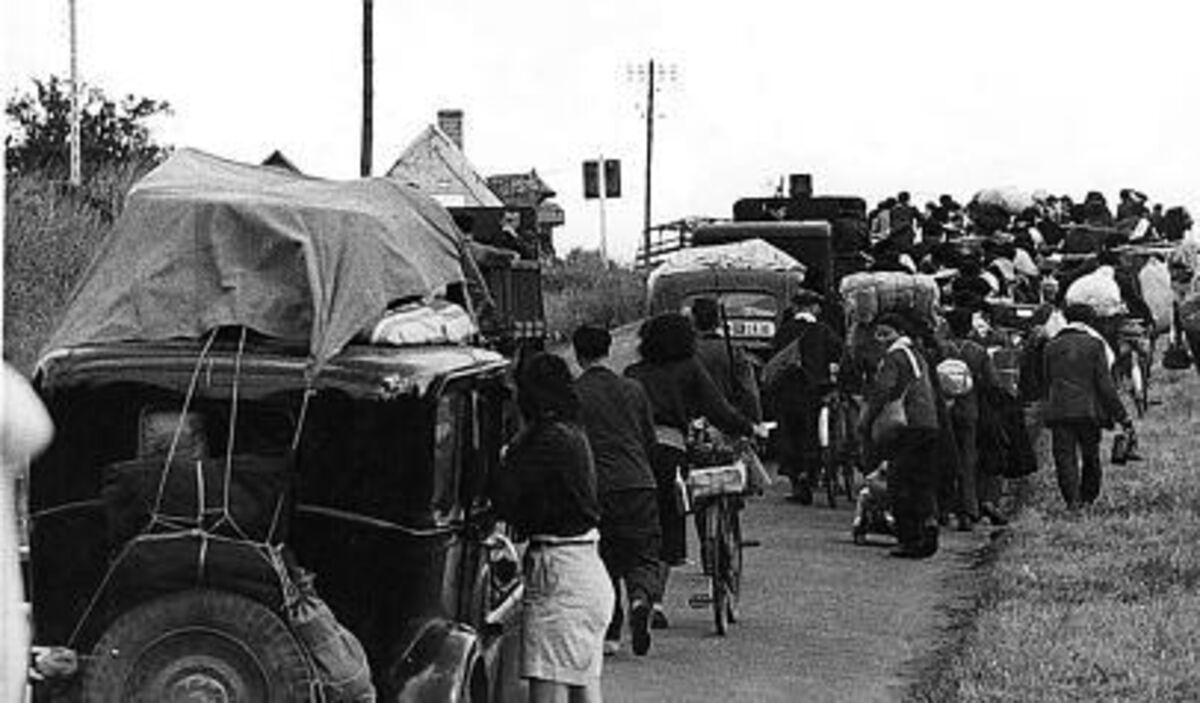
Source: https://www.odomez.fr/
Note the mixture of cars, bikes, and pedestrians

    When I recorded him, Grandpa said they traveled ten miles (16 km) a day, and the route I think they took (which is admittedly a guess), from Brussels to the coast, and then along the coast to Montreuil-sur-Mer, France, taking them right past Dunkirk and Calais, was 180 miles (290 km). I think they also hoped to reach England, so a coastal route made sense. He also said:

 And we arrived at the North Sea. In the … you would say “state.” In French, it is département, department – but that means state if you want – of Pas-de-Calais on the English Channel. 

    The North Sea comment also suggests a coastal route. I'm not certain if they stopped in the city of Calais or just the region of Pas-de-Calais, but in 1988, I got the impression he meant both, although I'm not entirely sure.

The route my grandparents might have followed during the Exodus of 1940
Interactive Google Maps Link

(Added: I now think they probably went to Lille first, then north to Calais)

    My research suggests that a key route during the Exodus was from Brussels to Lille in France, and from there to Paris and then to Bordeaux. But we know they went to Pas-de-Calais, and Paris and Bordeaux were in the wrong direction for that.  It's possible they went to Lille first, and then turned north, but that route and the stops they must have made (they stopped every night in a town with a maternity clinic for my grandmother's benefit), and that would have added a day or two to the trip.  So, I think they made a beeline for the coast.

    Another problem is that if they traveled only 10 miles a day, then the dates don't work - it would have taken them 18 days to arrive in Montreuil, where they stopped for several weeks (a dairy farmer took them in).  However, at 10 mpd, they would have encountered many of the areas after they had fallen to the Germans, whereas his story as a whole suggests that they encountered German soldiers only at the end of the trip.

    So, I started researching the Exodus to see how far people typically traveled in a day:

  • On foot:  6-12 miles per day (10-20 km). This was the majority of the refugees.
  • Bicycle or horse-drawn cart: 12-18 miles per day (20-30 km)
  • Car: Up to 20 miles per day (32 km).  Autos were less common, there were serious fuel shortages to contend with, and many cars were abandoned after they ran out of gasoline. 

    I also have the sense that the trip took less than 2 weeks, probably about 10 days, based on their departure date (May 15), the length of time they spent in Montreuil (3 weeks), and the approximate date they returned to Brussels (after the cease-fire went into effect in France on June 25, 1940).    In those days, cars traveled nearly as quickly as they do today, and under normal conditions, they would have made that drive in about 3 hours.

    The return journey to Brussels would have been tremendously easier. The roads had mostly cleared by then, and the French government offered fuel vouchers with short expiration dates to encourage people to fill their gas tanks as soon as possible and go back to where they came from.   

Well, after three weeks France capitulated. There was no reason for going farther south. So we went back to Brussels, and found our beautiful apartment in town.  

    Grandpa's taxicab would have made the trip back to Brussels in only a few hours.  He didn't tell me this outright, but given his complete lack of detail regarding the round trip (there was probably nothing to tell), I think it's a safe bet.

    But, I do have to figure out how to capture my grandparents' Exodus, because it was miserable and integral to their story, but ... it was two weeks of boredom, punctuated with terror and misery. I want to convey that it was a boring experience, but without making it boring to read.

Bibliography:

Sunday, July 13, 2025

1944-1947: The Élise Auvergne dossier


TLDR: If you don't want my commentary, just read the sections in courier text - those are the historical sources. You'll get the story, just with less context.

    There are two kinds of stories from my grandparents' life during WW2 - ones they didn't talk about because it was just too painful, and ones they talked about freely.

    The murder of Madame Auvergne - their landlady/babysitter/protector/friend - happens to fall between the categories - it was a very painful and terrifying episode in their life, but they talked about it freely.

    Perhaps it's because it wasn't done to them by a faceless evil enemy occupier; instead it was committed by an ally, against friends of theirs. Mrs. Auvergne liked to flirt with men in uniform (including Wehrmacht uniforms), and was a supporter of the collaborationist Vichy government, but she had also sheltered and protected my grandparents and aunt, and kept their secrets. But she was innocent of any crime.

    Her murder was an act of not-so-friendly fire, part of the reckoning France went through after the war, when rage and a national need for revenge temporarily overcame the rule of law. Even my grandpa was swept up in it, when, in a case of mistaken identity, he was arrested without evidence and held for 3 days before being released.

    The murderer was a man named Jacques Faure, and he was a résistant who served in my grandfather's own maquis unit, and was also someone Grandpa Arthur had considered a friend.  No wonder Grandpa was angry.

    I've written about the event before, but new information came to light when a historian friend in France sent me a bundle of letters from the Drôme Department archives, all written in the 1940s, when the crime was still recent, and they include a description from someone who was there.

    Yes, you read that right. I now have eyewitness testimony. I gasped aloud when I finished translating it, and I imagine that this is how a police detective must feel when she breaks a case.  

    So here is everything I know, in order. Red text indicates details you should remember.

Epitaphs:

Élise AUVERGNE, 46 years, died on 16 July 1944, cowardly murdered
Colette CHAVARENT, 9 years, died on 16 July 1944, cowardly murdered 
  

    Mrs. Auvergne and her niece are buried in a cemetery in Beaumont-lès-Valence.  I don't know the exact date they were buried, or when the gravestones were placed, but it seems likely that they are the earliest source of information.


Letter 1 - 19 Mar 1945 (new info):

    I saw Mr. Méjean yesterday. He passed a word to Colonel Descours regarding the matter in which you gave testimony. He’s confident there will be no consequences.

--ROUX, Léon to Captain Jean PLANAS

    I suppose this may be referring to something unrelated, and not to the murders, but either way, it had never occurred to me that Faure's actions might have impacted Grandpa's commanding officer. I mean, of course the authorities would want to know if Faure had acted alone, or if he'd been carrying out his commander's orders.


Letter 2 - 21 Feb 1947 (new info):

    RE: Certification of Captain Jean PLANAS

Dr. Planas

    Recently, when I had an X-ray at your place, I wanted to ask you for a written statement, and since you had a lot of people there that day, I completely forgot about it; in a nutshell, I'll explain what it's about. It's about the Jacques Faure affair.

    I want to tell you that this individual is still in Beaumont. So we would need written testimony on stamped paper testifying on your role when a certain Jacques Faure acted as someone ordered to assassinate my wife and my little niece Chavarent. This would be useful to us to file a petition to the Minister of Justice for a review of the trial.

    Enclosed you will find a stamped sheet of paper for the testimony and a stamp for the return.

    I look forward to your response. Please accept, Mr. Planas, my sincere gratitude.

--AUVERGNE, Léon to Jean PLANAS

    I took notice when I saw the signature on this letter, because Léon Auvergne was Mrs. Auvergne's husband.   But what does the letter tell me?  I need to distinguish between facts and implications. 

    The facts:

  •     Mr. Auvergne was Dr. Planas's patient.
  •     The tone of the letter was polite, even kind of chatty.
  •     Three years after his wife's death, he was trying to have the case reopened, hoping to bring her murderer to justice.
  •     Jacques Faure was from Beaumont-lès-Valence and was still living there. 

    The implications:

  • The chatty tone suggests that Mr. Auvergne didn't blame Dr. Planas for his wife's death.  
  • Because the Auvergnes were patients of Dr. Planas, the events probably horrified him, that a soldier under his command gunned down people he cared for in his medical practice.

    According to my grandfather, most people (including the Auvergnes) had been supporters of the collaborative Vichy government early in the war. However, by the summer of 1944, Vichy had become tremendously unpopular, and people who still supported them would have been distrusted.

    I grew up in a small town like Beaumont-lès-Valence, where everyone knows everyone, and gossip can and does run rampant, and I must imagine that the townspeople, even if they disagreed with the Auvergne's political beliefs, would have been hostile towards a man who drunkenly gunned down a little girl.


Planas deposition handwritten on back of letter 2 (date unclear):

I, the undersigned, Dr. Jean Planas, physician residing at Étoile, former captain attached to the 2nd Battalion, Drôme Company, hereby attest that Private Jacques Faure, who belonged to the 3rd section of the Company, was on leave on July 16, 1944. That during the attack on Madame Auvergne and her niece Chavarent, he acted spontaneously contrary to all requisitions and references: upon his return to the Company, on the morning of the 17th, Jacques Faure was taken prisoner. He was taken under arms and transferred to the headquarters to be tried there.

    Dr. Planas's handwriting was difficult to read, so I can't be entirely sure that my transcription/translation is perfectly accurate, but I think that I've captured the gist. The only new info is that Faure had been in the third section (of the 4th Company, 2nd Battalion, Drôme FFI), and that he returned to HQ on July 17th.


Letter 3 - 3 Mar 1947 (new info):

Dear Doctor Planas,

    Please excuse the delay in responding to your letter of the 25th, caused by the bad weather; which left us completely cut off from mail service for three days. Let me first tell you that I am particularly pleased with the result of my medical analysis, because it worries me greatly. 

   Now I am writing again regarding my statement about the Jacques Faure case. I must tell you that he is still here, but it seems they are planning to leave because they have rented out their house and land.

    So, on the day of July 14, 1944, he came to Beaumont, to the property of Mr. Leillaret. He had a minor altercation with several boules players, especially with Mr. Jean Bellon, whose son was in the Resistance. And on July 16, 1944, he reappeared again in Beaumont and presented himself at the home of Mr. Jean Bellon, with the clear intention of killing him, since he had a revolver in his hands. Fortunately for them, they were having a family meal — a child found it very disturbing. He then went to the Les Faures neighborhood, to my home, on July 16, 1944, at 6:30 p.m., and opened fire on the whole family who were seated outside the house, having a small family snack.

--AUVERGNE, Léon to Jean PLANAS

    This letter really reveals a lot of new information:  
  • The Faures were leaving Beaumont, which I believe is strong evidence that the town had become a hostile place for Jacques.
  • Mr. Auvergne was having health issues.
  • Jacques Faure was absent from 4th company HQ from July 14-17.
  • On Bastille Day, Faure appeared in Beaumont-lès-Valence, and got into fights with the locals. He then disappears from view for two days.
  • Jacques Faure shows up at the Bellon home on July 16 and threatens him with a handgun, but a crying child deters Jacques who fled the scene.
  • He found the Auvergnes eating outside, and opened fire on them at 6:30pm.  
    Léon Auvergne's birthday was July 17, 1891, so his wife was murdered the day before his 53 birthday (a not very happy birthday for the poor man), and he was not quite 56 years old at the time the letter was written.

    The cottage where my grandparents lived was very nearby, which meant that if my grandmother and aunt were home, they would have heard the gunshots and screams.

    I wish I knew what happened next. Did Jacques Faure flee after he opened fire? Did someone disarm him? Did gendarmes catch him and bring him to 4th Company headquarters?  Did Jacques know what he'd done?


History of the 4th Company - 1955:
Three tragic episodes disrupted the shaping of our Company: June 12, a member of the 3rd Section stole from Warrant Officer LABROSSE a Colt 45, a US Navy weapon, and went to shoot a milice volunteer in Beaumont.  Unfortunately, his lack of composure made him shoot down the wife and daughter of this sinister individual who came between our comrade and his target....

--Dr. Michel PLANAS 

    Michel Planas was a medical student in the summer of 1944.  He was Dr. Jean Planas's younger son, and he served under his father as the head of the 4th Company medical division. In 1955, after his father's death, he wrote a 45-page history of the 4th Company that covers the summer of 1944.

    His description of the murders is very brief, and a little vague, almost as if the Dr. Planas (the younger) wanted to report as few details as possible, yet still remain true to the history. He wrote it 11 years after the events in question, and like my grandfather's account 20 years later, he got the date wrong.
    
    There are other details that aren't quite right - there's no suggestion in the historical sources that I have, that the Auvergnes were ever members of the Milice française - my grandfather would have defended them against such an accusation in an instant.  Grandpa also thought Mrs. Auvergne was the target, not her husband.  The child wasn't their daughter (they had no biological children), rather she was named Colette Chavarent, and was their niece.  These small mistakes makes me think that Michel Planas wasn't really involved in the incident, and didn't know the people, the way his father and my grandfather did.


Yellow Legal Pad Stories - 1974:
Sometime in June, while the 4th Company was still on Ourches, Jacques Faure, one of us, went home without any authorization, got drunk and shot to death Mme. Auvergne. The Auvergnes were the owners of the old house in which my wife and child lived. She had a reputation being a friend of Germans. In fact she belonged to a family of collaborators, but the rumors of her having denounced the FFI’s (the home of one FFI has been burned by Germans who gave 5 minutes to this family to leave the house) were probably only gossip. She knew about me being in the Maquis and my wife has not been investigated. Jacques Faure’s self-handed stupid act resulted in a real danger to many families of FFI, mostly to mine. In addition, inadvertently he shot also her niece, the father of which was a POW in Germany since 1940.
Captain Sanglier was very angry at Jacques. He was dispatched, under armed guard to the headquarters of Major Antoine. From now on Jacques served in a command of desperados, most of whom were killed in extremely dangerous missions, but he survived. 
-- Arthur Lubinski 

Grandpa was about 64 when he wrote this, and except for the date, it matches the other accounts pretty well. Here is what I learned:
  • The Auvergnes sheltered the Lubinskis, and despite their support of a fascist government, never betrayed them. I wonder about the nuances in their political beliefs.
  • Mrs. Auvergne had a reputation of "being a friend of the Germans." Not sure exactly what that means, but I've always interpreted it as she liked men in uniform.
  • Mrs. Auvergne, not her husband, was the target.
  • Jacques Faure was sent to battalion (?) headquarters, and then to a group that served dangerous missions. In other words, he was intended to be cannon-fodder.

Arthur Lubinski's Oral Testimony of WW2 Experiences - 1988:

     Yes, in our unit, our company was a man whose brain was not fully developed ... we say retarded.
    And the Germans suspected that someone was in the maquis. And they were right. And they came to Beaumont-lès-Valence and burned the farm. And the whole village, the whole town was trying to guess who denounced them. How the Germans knew it? 
    Well, we lived in a home, you know, this seventeenth-century peasant home with no floor, with one tiny window. We lived over there. It belonged to the Auvergnes; Mr. and Mrs. Auvergne ... They were people from the right and they were … France was divided and they were for Vichy, for the government. Not for de Gaulle in London, but Vichy government which collaborated with Germans. And she was flirting with German officers, etc. And then came the suspicion that she denounced. 
     And my retarded friend, he came through the mountains, came from the mountains and shot down Mrs. Auvergne with a pistol. Killed her. And she was keeping in her hand, her niece, whose father was a prisoner of war in Germany.  And it’s a miracle that this was not Lillian because Lillian was supposed to stay with Madame Auvergne, but at the last moment, Mother left her with someone else. I don’t know what she did. 
     But in any event, almost Lillian was killed and the man returned to the Maquis. He came without permission, he killed someone without permission, and therefore as punishment, he was sent to a company whose duties were dangerous to such an extent that his probability of survival was very remote. And nevertheless he survived. 
     Madame Auvergne did not denounce these people. If she had, she would have denounced me. Roma would have suffered; the child ... It was not she. And after the war – he survived the war – after the war he had to go to a court and was accused of killing someone. And the gendarme – police – came to me, to ask what I knew about it. I said, “Madame Auvergne had wrong political ideas but she did not denounce. I wouldn’t be alive.”   

    But true justice couldn’t exist. He was not ... He was freed … He was not condemned. He didn’t spend time in jail. Very bad. 


    This is an excerpt from the tapes I made of my grandfather when I was 19.  He was 78 at the time, and his memories of the event were still very vivid, nearly 44 years later.  It is also the most complete version of the story.

    His testimony tells us:
  • Jacques Faure suffered from some sort of intellectual disability (and this is possibly confirmed by Michel Planas's phrase "lack of composure"). Grandpa said he had mental retardation, but I don't know the extent of his condition.
  • The Auvergnes may have been right-leaning supporters of the Vichy Government and Marshal Pétain, but they kept my family's secrets.
  • My grandfather was certain that the Auvergnes hadn't been Gestapo informants (and he had good reason to think so).
  • Jacques Faure went AWOL, and used a pistol (and not say a Sten submachine gun, which was very common in the FFI).
  • My aunt could well have been killed, because Mrs. Auvergne was supposed to babysit her, but for some reason, my Grandma Roma kept her home, or left her with someone else. That suggests that Roma might not have been home at the time of the murders.
  • My grandfather's description closely matched that of both Léon Auvergne, and that of Dr. Jean Planas, plus he knew the people involved very well, so I trust his version of the events.

    It's interesting to see what people knew and when they knew it, as well as how the testimonies differ based on whether the individuals were present or not. I'd love to see the official police reports and court transcripts, but I have no idea if they still exist.