Showing posts with label Biscuit. Show all posts

Monday, April 27, 2026

Recipe: Maroilles Cheese Tart (Tarte au Maroilles)

When I was researching my grandparents' experiences in WW2, I came across descriptions of this traditional dish from northern France. It sounded so good, I wrote it into the story. I researched recipes, did some conversions, and cobbled together this recipe, which I think is reasonably authentic.

Maroilles is hard to find in the US - I had to order it from a cheese shop in New York City that imports it, and have it overnighted to me (yes, that was expensive, and so we offset the shipping cost by buying a LOT of cheeses, which was a lot of fun, but my arteries are probably not thanking me). I've provided substitution suggestions below (Muenster is probably the closest widely available cheese on this side of the Atlantic).

Prettiest dish I've ever made


Dough Ingredients:
  • 2.25 teaspoons or 1 packet of active dry yeast
  • 4 fl ounces (120 ml) of milk
  • 2.25 cups (280 g) flour
  • ½ teaspoons salt
  • 2 eggs
  • 4 tbsp (60 g) butter
  • 2 tsp sugar
Filling Ingredients:
  • 10-12 ounces (280-340g) of Maroilles cheese (or a Muenster or maybe Sharp Cheddar. Look for a local pungent, soft-ripened, washed-rind cow's milk cheese.  Any not-too-hard, slightly creamy/funky cheese will be delicious in this tart)
  • 8 fl oz  (240 ml) of crème fraîche*
  • 1 egg
  • 1 egg yolk
  • Freshly ground pepper to taste
  • 2 generous pinches ground cumin, or 1 pinch of freshly grated nutmeg.
  • Sprinkle of paprika (preferably smoked), optional

  1. Leave the milk and butter out until it is room temperature.  The butter should be very soft.

  2. Dissolve the yeast and sugar in the milk, and let it sit for 5 minutes. Beat the eggs into the milk.

  3. Place the flour and salt into a mixing bowl, or the bowl of a stand mixer fitted with a standard mixing paddle, and make a well in the center. Pour the milk mixture into the well, and mix well.

  4. Work butter into the dough. 

  5. As soon as ingredients are well combined, switch to a dough hook or knead by hand for 5 minutes. The dough should be sticky and stretchy.

  6. Place dough in an oiled bowl, cover, and let rise in a warm place for 60 minutes or until doubled in volume.

  7. Butter and lightly flour a 10” (25 cm) diameter baking dish, springform pan, or even a cast iron skillet. Ensure the sides of the dish are well buttered/floured.

  8. Reserve a ping-pong ball-sized ball of dough (no bigger than 1.5" or 3.75 cm). On a floured surface, roll out the remaining dough until it’s big enough to cover the bottom of the dish.  According to French sources, it should not climb the edges, but should sit flat in the bottom of the dish. Place the ball in the center (it's to prevent the cheese custard from pooling in the center).

  9. Let the dough rest another 30 minutes.

  10. Preheat oven to 375F (190C).

  11. Beat the egg, egg yolk, and creme fraiche together, season with black pepper and cumin or nutmeg.

  12. Scrape off the thickest/hardest parts of the rind, and slice the cheese thinly.  Spread nearly all of the cheese on the dough in the tart pan. The remaining cheese should be cut into smaller chunks.

  13. Spread the egg mixture over the cheese, and place the remaining cheese chunks on top (it creates a nice texture).

  14. Sprinkle with paprika if using.

  15. Bake for 30-35 minutes until the top is bubbly and browned.


Serve with a local craft beer (or cider or wine), and a fresh salad.


Variations: You could try including asparagus, sauteed leeks, or caramelized onions under the cheese. I've also seen suggestions for crushed walnuts.

Crème fraîche can be hard to find in the US, particularly if you don't live near a major metropolitan area. It's VERY easy to make. Place a pint (470 ml) of heavy cream and 2 tbsp of buttermilk with active cultures into a canning jar and give it a good stir. Screw the lid on, and place somewhere warm for 12-24 hours (aim for about 80F (27C). Inside the oven with the light turned on is a good place to try. Check after 12 hours, and if it's not nice and thick, leave for another 4-12 hours until it's got the consistency of sour cream, then refrigerate. It lasts about a week in the fridge. It can be frozen, but freezing makes it grainy, so it should only be used for cooking after thawing.

Sunday, April 19, 2026

Printed Copies Make it Real


    I finished Biscuit a couple of weeks ago.  

    Let me rephrase. I finished a major revision a couple of weeks ago.  It's now in the hands of an editor, and once that's done, I intend to try to find a traditional publisher.   

    In the meantime, I had four copies of the book printed and bound, just as souvenirs for my family and me.  It's not for sale anywhere, nor will it ever be. It's still an unpublished manuscript. And someday, I hope that it will be published for real.

And because this was just for me, it's not just any version, but the version that is the most blue-sky, the most ... mine. If I could have whatever I want, this is what I'd include:

  • A nice, large 11-point font, with a wide 1.2 line spacing (the extra space between lines makes it more pleasant to read, but it adds to the page count).
  • All 160,000 words of the story, before anyone makes me cut it down by 20k-30k words
  • A full-length afterword (all 3K words or so)
  • Letter from my grandfather to his commanding officer, written after he immigrated
  • Essay written by my grandfather about the day he became a US citizen
  • Glossary
  • List of foreign phrases and their translations.
  • A metric-imperial conversion table.
Anyway, I got my copy, and it makes my heart go pitter-patter.  Almost five years of work went into it, and it's looking good.  It feels great, and I'm proud of it.


First page of chapter 1

Cover design inspiration

It's a bit hefty.

Last printed page

Saturday, March 28, 2026

August 1944: Verifying Grandpa's story of befriending Americans from a downed Flying Fortress

Public Domain


    One of the coolest things that happens during research is finding evidence that corroborates a story. Here's one of my grandfather's, about meeting two members of a B-17 crew that was shot down.  He wrote this account probably in 1974.

    In the evening one of our patrols brought to the camp two American Air Force soldiers and I became an interpreter. They were crew members of a flying fortress which has bombed the bridge in Valence-sur-Rhone. The plane has been hit by flak and one man killed. All the others bailed out. One more died before reaching the ground. Three others, who were wounded, could do anything else as stay and undoubtedly became German prisoners. All the others fled in groups of two East toward the mountains and one of these groups has been picked up by our patrol. One of the two Americans was Larry Gault, first lieutenant, plane’s commander. He lived in Oregon, where he owned forests and sawmills. The other’s name was Edward Mettler, the plane’s gunner. He was before the war an art student in Chicago. 

    They were courageous, fine people. They used to volunteer for all missions. Once, when warned about a great danger of a mission, Larry Gault answered “Flying is dangerous too, you know.” They spent about ten days with us and left with the first American Intelligence officer who reached us. Edward Mettler cried then like a child. He fell in love with one of our intelligence girls, who traveled between the German occupied Rhone Valley and our mountains. The separation seemed cruel on him indeed.

    Grandpa didn't mention the date, but from other details in the text, I narrowed it down to August 15, 1944.  Today, I did an internet search for "edward mettler flying fortress ww2" because I'd love to find out if he and the intelligence girl (FFI courier) ended up together, and I found this page, and this page.

    They confirm that Lt. Gault was the pilot, and Mettler was a gunner, and it mostly confirms the events in question (that the ship had been downed by flak, and one man killed), including the date. It also provided Mettler's rank (sergeant), which is great because I'd guessed wrong (corporal), and this allowed me to correct it.

    Grandpa said another guy died, but the page contradicts that; it's possible Grandpa remembered that part wrong, or that Gault and Mettler were simply mistaken when they told him about the incident.

    Anyway, how cool is that???

    Hopefully, I'll eventually find out whether Mettler and Jeanne stayed together.  The romantic in me likes to think that they did.

Friday, March 27, 2026

1944: Marie Moreau and pop-culture coincidences

Source: Vintage Photos of Beautiful Female Partisans and
Resistance Fighters During World War II

     After my grandfather died, my mother found a handwritten account of his time in the maquis (Fourth Company, Second Battalion, Drôme FFI). He wrote at least two stories about the courageous couriers for his unit, whom he referred to as "intelligence girls."  

    Other of his stories might also have involved the couriers, but he didn't explicitly say so (he used phrases like "we found out," or, "later someone told us," that might have been referring to information from the couriers).  But he rarely identified people by either their real or code names in his stories, so I don't know if his stories referred to the same woman or more than one.  

    So, I created a composite character codenamed "Jeanne" (after Jeanne d'Arc), who became the unit's best intelligence officer and the moral heart of the group.  Jeanne became the intelligence girl of my grandfather's stories, a smart, clever, and no-nonsense woman my grandfather admired, and I reveal her "real" name toward the end of the book: "Marie Moreau." Yes, the alliteration in her initials was deliberate.

    I actually know the names of several real-life women who served in my grandfather's FFI unit, but there's no way for me to connect Grandpa's stories with their real-life counterparts, and because I didn't want to misidentify anyone, I gave the composite Jeanne a fictitious real name.

    Coincidentally, it turns out that Marie Moreau is also the main protagonist in Gen V, a spinoff of The Boys TV show.  

    Sigh.  I had to rename my character to avoid sharing with a TV show. She is now "Marie Morand."

Saturday, March 7, 2026

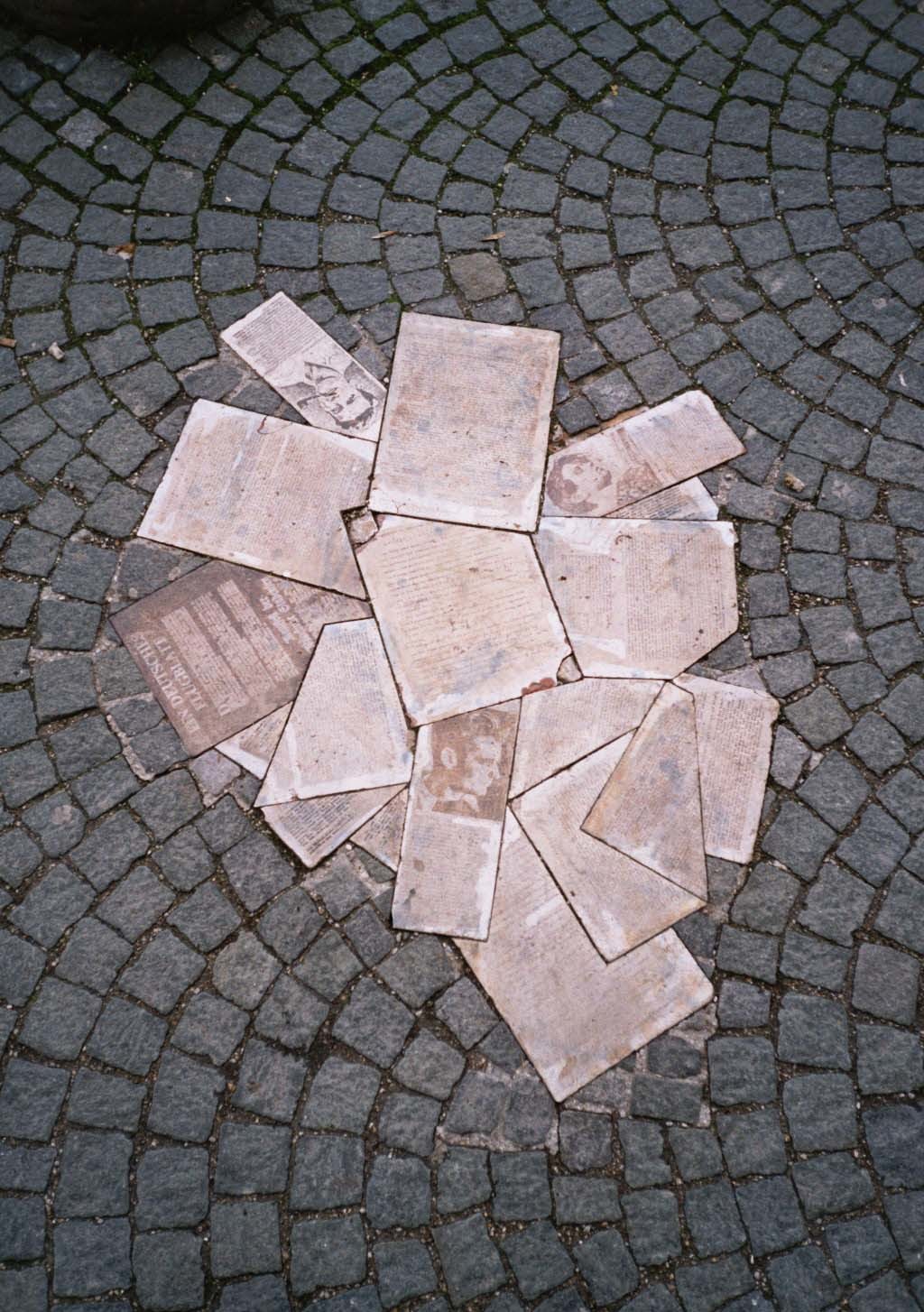
The White Rose (Weiße Rose) Resistance Group

Monument to Die Weiße Rose resistance
movement, at the University of
Munich, Germany. Public Domain.


    So, a few months ago, I started building a timeline of WW2 events that I could connect to each chapter of Biscuit. When I could, I used resistance activities because they further an important theme of the book. Anyway, I came across the White Rose (Weiße Rose) resistance group at the University of Munich, and damn ... those were some courageous, heroic people.

    Anyway, Germany is a sort of boogieman-type villain in Biscuit (hard to write a book about an ethnically/culturally Jewish family in WW2, where Germany doesn't look pretty bad). But in this situation, there's not a whole lot of opportunity for nuance. It doesn't help that most of Arthur and Roma's interactions were with Germans in enforcer-type roles. Soldiers at roadblocks. Gestapo investigating sabotage, soldiers chasing down illegal refugees.
So when I found opportunities to make the portrayal of Germany a little more complex, I took them. One was to use the White Rose group as part of my timeline, and the other was to have a German POW show genuine remorse for his actions, and also explain why he couldn't dodge the Wehrmacht draft, despite holding anti-Nazi beliefs.

    Anyway, back to the White Rose. One of the members was a young woman named Sophie Scholl. She and her brother Hans were executed by the Nazis for distributing anti-Nazi leaflets for the White Rose, but after her death in 1943, Germany has never forgotten her:
  • They placed a bust of her in the Wahalla Memorial.
  • There are streets and squares named for the Scholls all over Germany.
  • In 2003, Sophie and Hans placed fourth in a poll of the most important Germans, beating out Einstein, Bach, Gutenberg, etc. If only the votes of young Germans had been counted, the Scholls would have placed first.
  • There have been several German TV shows and movies telling the story.
The transcripts of the Scholls' interrogations resided in East German archives until the 1990s. After reunification, the transcripts came to light, and one filmmaker used those as primary sources, along with survivor testimony, to write the screenplay Sophie Scholl – The Final Days (Sophie Scholl – Die letzten Tage). The movie was released in 2005, was nominated for and won numerous awards, and I'm planning to watch it in a few weeks:


Tuesday, January 27, 2026

1939: Schopenhauer's Cheap Pride

Arthur Schopenhauer
By Johann Schäfer - Frankfurt am Main
University Library, Public Domain.

    There's this thing that happens, where I come up with an idea that I think is just dandy, smart, and incisive, and then I find out someone else came up with it long before I did.  [Big, gusty sigh]

    A few weeks ago, I rewrote the third chapter of Biscuit, and, in an attempt to understand why the Germans supported Hitler, I wrote the following scene between my Grandma Roma, great-grandmother, and great-aunt:

    There was a lull, and then her sister asked with quiet befuddlement, “I don’t understand what the Germans see in him. He’s a sweaty little man with a tiny mustache and a bad haircut that flops into his face.  And he shrieks up on that stage like he is having an apoplexy.  In his letters, has Kuba ever said anything about why people like Hitler?” 

    Roma nodded.  “Jake says it’s because Hitler offers them cheap pride at a time when… how did he put it? Oh. Yes. When they were jobless and starving for empty dignity.”

    “Cheap pride?” Lola asked.

    “You know how people naturally take pride in things they work hard for?” When Roma saw that her mother and sister understood where she was going, she continued. “Well, what if you have nothing like that? No job, nothing to work for, nothing to point to that’s worthy?”

    Teofila put it together first. “Hitler gave them something easy to be proud of, didn’t he? Maybe the only thing in their life for which they never had to struggle.”

    “Yes, Mama,” Roma answered. “You don’t need any personal accomplishments, nor even useful skills.  All you have to do is be born Aryan.”

    Lola finished the idea. “And if you weren’t born Aryan, well then, tough luck.”

    The women were quiet for a long time.


    I was really proud of my cheap pride concept.  Germany had been harshly punished for WW1, and the Great Depression hadn't helped matters. Between the reparations and the mass joblessness due to the depression, the people were desperate for something to believe in.  I have always felt that the Treaty of Versailles, which pinned the fault for WW1 on Germany, is what led to the rise of Hitler and the cause of WW2.

    Then, today, the following quote by the German philosopher Arthur Schopenhauer came across my Facebook feed:

“The cheapest sort of pride is national pride; pride in his own nation suggests he has no qualities of his own for which he can be proud, otherwise he would not reach for what he shares with so many millions of his fellowmen.  He who possesses significant personal merits will see clearly the ways in which his own nation falls short, since its failings will be constantly before his eyes. But that poor beggar who has nothing in the world for which he can be proud, as a last resort, latches onto pride in the nation to which he belongs, and is ready and glad to defend tooth and nail, all of the nation's errors and follies, thus reimbursing himself for his own lack of accomplishments."

—Arthur Schopenhauer, 1788-1860

    Well, okay, then.   Looks like I didn't come up with the idea first; Schopenhauer did, more than 100 years before I was born. [Another big, gusty sigh].  I suppose I shouldn't be surprised, though. The Ecclesiastes principle states that "there is nothing new under the sun," and Mark Twain might have said, "There is no such thing as a new idea. It is impossible. We simply take a lot of old ideas and put them into a sort of mental kaleidoscope."   While I might not have come up with the idea first, this does tell me that human nature doesn't really change.


Wednesday, January 7, 2026

1939: Cost-Benefit Analysis and the Tiffany Problem

Apologies to Ms. Darwish for irrelevantly
using her excellent album to refer to a literary concept

    I was first alerted to the Tiffany Problem (TP), but didn't encounter it in my own writing until last night, when a writer's group workshopped a chapter from Biscuit for me.   

    TP refers to a situation in which the modern audience perceives a name, word, or concept as too modern, so that its use in the text seems historically inaccurate, even if it is not actually anachronistic. In other words, it's something that is incorrectly assumed to be a goof (to use IMDb terminology). 

    The origin of the phrase arises from the idea that Tiffany was a hugely popular name in the 1980s, and so people assume it is modern, when the name is actually quite old (it's a nickname for Theophania, which dates to medieval times). The first recorded example of Tiffany as a girl's name spelled with a -y dates to the 1600s.

Here are the two examples from my writing, and they are from a scene taking place in 1939:

  • She was planning to quit her job when the baby came, and then they’d have no financial cushion at all.
  • As he always did when making a big decision, he did a cost-benefit analysis. He quickly drew a two-column table on his scratch pad and filled it out.

    In the interests of fairness to my readers, I didn't know the history of either phrase before last night.  When they brought it up, I suspected cost-benefit analysis (CBA) was historically accurate, but that's all it was, a suspicion. And I never even thought about "financial cushion." I used both phrases because I didn't think to separate my vocabulary from that of my characters.

    Financial cushion really is a problem - while the term "cushion" has been used figuratively to mean "protective buffer" for a long time (back to the 1800s, possibly earlier), the word "cushion" used in conjunction with "financial" first started appearing in print in the 1940s and 1950s.  It began appearing in official documents in the mid-1960s but didn't come into common use until the latter part of the 20th century.  While it's not impossible in 1939 (word usage always starts before the historical record, which is just when it was first written down), it's definitely improbable. I'll probably just remove the word "financial" (or look for similar period-accurate phrases).

   CBA, on the other hand, is definitely a Tiffany. The concept was first played with by French engineers in the 1700s. A French civil engineer named Jules Dupuit (the guy who helped build the Paris sewer system) pioneered the modern approach in 1844 (though he called it "the measurement of the utility of public works"), and an English economist standardized and formalized it by the late 1800s. The phrase was in common use in English by the 1930s (the practice and term were regularly used in President Roosevelt's WPA projects), and CBAs became part of American federal policy by 1939.  

    Interestingly, despite its origin as a French concept, the modern French version of the phrase, analyse coûts-bénéfices, or sometimes analyse coûts-avantages, didn't go into common usage until the 1950s. So the concept had been well-established for nearly 100 years by the time my story takes place. The cognate was in common use in English but less commonly in French. And given its origin as a French engineering term, I suspect that its use by a French-speaking engineer in 1939 is downright likely.

    The thing is, even though the use of CBA isn't really a goof, it might still be a problem if it yanks readers out of the world of the story.  

    It raises the question of what my role as a storyteller is. On one hand, it's not my fault when readers lack an encyclopedic etymological understanding of every possible phrase I might use.  On the other hand, a good writer immerses her readers in the world of the story, and it would be foolish not to minimize stimuli that yank readers out of that world.

    This is where decision-making gets hard.  My grandpa was an engineer, and I want his story to seem like it's from an engineer's point of view. Using engineering terms that are also in common use just makes sense to me.  But at what cost? (Ha! See what I did there?)

Thursday, November 27, 2025

June 1944: Killing a Kübelwagen - v5

    One story my grandfather told more than once was about the non-commissioned officer in his Maquis unit who, through a spectacular bit of sharpshooting, shot the driver of a Kübelwagen (German equivalent to a jeep) that contained the commanding officer of a German unit. The car wrecked, killing all three men inside.  

    I have two versions of the story from my grandfather (from 30 and 44 years after the events), one from the son of his commanding officer (written in 1955), and one from a non-fiction book. You can read all four of those versions here.

    A couple of days ago, I found what is very likely a fifth version.  One that contains the names of the Germans killed in the wreck.  Certain details match up - The date (June 28, 1944), the fact that there was a German convoy, and that the German commander was killed when the car was destroyed, and the location (Ourches valley, on the way to La Rochette-sur-Crest).  But other details vary, like the weapons used (gun, hand grenade, sticky bomb), and the vehicles used. But, here it is, written by Nick Beale:

Obltn. Stefan Ulrich, in La Rochette, 2 km S Ourches, (no time or cause stated).Uffz. Aloysius Hennecke, at 10.00 hrs. in La Rochette, multiple injuries from an “adhesive charge” (a Gammon Grenade?).Ogefr. Werner Gaudigs, in La Rochette (no time or cause stated).

That three men of a motorised unit were killed and that a “sticky bomb” was involved suggests an attack on a vehicle or vehicles and Resistance historian Joseph La Picirella has written that a convoy of 10 trucks from Valence, each carrying a dozen men, was attacked by the Maquis en route to La Rochette-sur-Crest. He says that the vehicle carrying the detachment commander was destroyed and the bodies of the occupants were taken to the house of the mayor. This account seems to fit what is known of the deaths of Gaudigs, Hennecke and Ulrich (whose rank may mark him as the commander of the operation). The mayor of La Rochette, Paul Baude, later certified, “that on the 28th of last June the old village of the commune was burned by the Germans by means of incendiary bombs without the inhabitants being able to remove their furniture”.

    I've found independent verification of what happened to the bodies (taken to La Rochette mayor's house, and the reprisals). Now I need to find Joseph La Picirella's writings.  Pretty cool, to find more verification!

Sunday, July 13, 2025

1944-1947: The Élise Auvergne dossier


TLDR: If you don't want my commentary, just read the sections in courier text - those are the historical sources. You'll get the story, just with less context.

    There are two kinds of stories from my grandparents' life during WW2 - ones they didn't talk about because it was just too painful, and ones they talked about freely.

    The murder of Madame Auvergne - their landlady/babysitter/protector/friend - happens to fall between the categories - it was a very painful and terrifying episode in their life, but they talked about it freely.

    Perhaps it's because it wasn't done to them by a faceless evil enemy occupier; instead it was committed by an ally, against friends of theirs. Mrs. Auvergne liked to flirt with men in uniform (including Wehrmacht uniforms), and was a supporter of the collaborationist Vichy government, but she had also sheltered and protected my grandparents and aunt, and kept their secrets. But she was innocent of any crime.

    Her murder was an act of not-so-friendly fire, part of the reckoning France went through after the war, when rage and a national need for revenge temporarily overcame the rule of law. Even my grandpa was swept up in it, when, in a case of mistaken identity, he was arrested without evidence and held for 3 days before being released.

    The murderer was a man named Jacques Faure, and he was a résistant who served in my grandfather's own maquis unit, and was also someone Grandpa Arthur had considered a friend.  No wonder Grandpa was angry.

    I've written about the event before, but new information came to light when a historian friend in France sent me a bundle of letters from the Drôme Department archives, all written in the 1940s, when the crime was still recent, and they include a description from someone who was there.

    Yes, you read that right. I now have eyewitness testimony. I gasped aloud when I finished translating it, and I imagine that this is how a police detective must feel when she breaks a case.  

    So here is everything I know, in order. Red text indicates details you should remember.

Epitaphs:

Élise AUVERGNE, 46 years, died on 16 July 1944, cowardly murdered
Colette CHAVARENT, 9 years, died on 16 July 1944, cowardly murdered 
  

    Mrs. Auvergne and her niece are buried in a cemetery in Beaumont-lès-Valence.  I don't know the exact date they were buried, or when the gravestones were placed, but it seems likely that they are the earliest source of information.


Letter 1 - 19 Mar 1945 (new info):

    I saw Mr. Méjean yesterday. He passed a word to Colonel Descours regarding the matter in which you gave testimony. He’s confident there will be no consequences.

--ROUX, Léon to Captain Jean PLANAS

    I suppose this may be referring to something unrelated, and not to the murders, but either way, it had never occurred to me that Faure's actions might have impacted Grandpa's commanding officer. I mean, of course the authorities would want to know if Faure had acted alone, or if he'd been carrying out his commander's orders.


Letter 2 - 21 Feb 1947 (new info):

    RE: Certification of Captain Jean PLANAS

Dr. Planas

    Recently, when I had an X-ray at your place, I wanted to ask you for a written statement, and since you had a lot of people there that day, I completely forgot about it; in a nutshell, I'll explain what it's about. It's about the Jacques Faure affair.

    I want to tell you that this individual is still in Beaumont. So we would need written testimony on stamped paper testifying on your role when a certain Jacques Faure acted as someone ordered to assassinate my wife and my little niece Chavarent. This would be useful to us to file a petition to the Minister of Justice for a review of the trial.

    Enclosed you will find a stamped sheet of paper for the testimony and a stamp for the return.

    I look forward to your response. Please accept, Mr. Planas, my sincere gratitude.

--AUVERGNE, Léon to Jean PLANAS

    I took notice when I saw the signature on this letter, because Léon Auvergne was Mrs. Auvergne's husband.   But what does the letter tell me?  I need to distinguish between facts and implications. 

    The facts:

  •     Mr. Auvergne was Dr. Planas's patient.
  •     The tone of the letter was polite, even kind of chatty.
  •     Three years after his wife's death, he was trying to have the case reopened, hoping to bring her murderer to justice.
  •     Jacques Faure was from Beaumont-lès-Valence and was still living there. 

    The implications:

  • The chatty tone suggests that Mr. Auvergne didn't blame Dr. Planas for his wife's death.  
  • Because the Auvergnes were patients of Dr. Planas, the events probably horrified him, that a soldier under his command gunned down people he cared for in his medical practice.

    According to my grandfather, most people (including the Auvergnes) had been supporters of the collaborative Vichy government early in the war. However, by the summer of 1944, Vichy had become tremendously unpopular, and people who still supported them would have been distrusted.

    I grew up in a small town like Beaumont-lès-Valence, where everyone knows everyone, and gossip can and does run rampant, and I must imagine that the townspeople, even if they disagreed with the Auvergne's political beliefs, would have been hostile towards a man who drunkenly gunned down a little girl.


Planas deposition handwritten on back of letter 2 (date unclear):

I, the undersigned, Dr. Jean Planas, physician residing at Étoile, former captain attached to the 2nd Battalion, Drôme Company, hereby attest that Private Jacques Faure, who belonged to the 3rd section of the Company, was on leave on July 16, 1944. That during the attack on Madame Auvergne and her niece Chavarent, he acted spontaneously contrary to all requisitions and references: upon his return to the Company, on the morning of the 17th, Jacques Faure was taken prisoner. He was taken under arms and transferred to the headquarters to be tried there.

    Dr. Planas's handwriting was difficult to read, so I can't be entirely sure that my transcription/translation is perfectly accurate, but I think that I've captured the gist. The only new info is that Faure had been in the third section (of the 4th Company, 2nd Battalion, Drôme FFI), and that he returned to HQ on July 17th.


Letter 3 - 3 Mar 1947 (new info):

Dear Doctor Planas,

    Please excuse the delay in responding to your letter of the 25th, caused by the bad weather; which left us completely cut off from mail service for three days. Let me first tell you that I am particularly pleased with the result of my medical analysis, because it worries me greatly. 

   Now I am writing again regarding my statement about the Jacques Faure case. I must tell you that he is still here, but it seems they are planning to leave because they have rented out their house and land.

    So, on the day of July 14, 1944, he came to Beaumont, to the property of Mr. Leillaret. He had a minor altercation with several boules players, especially with Mr. Jean Bellon, whose son was in the Resistance. And on July 16, 1944, he reappeared again in Beaumont and presented himself at the home of Mr. Jean Bellon, with the clear intention of killing him, since he had a revolver in his hands. Fortunately for them, they were having a family meal — a child found it very disturbing. He then went to the Les Faures neighborhood, to my home, on July 16, 1944, at 6:30 p.m., and opened fire on the whole family who were seated outside the house, having a small family snack.

--AUVERGNE, Léon to Jean PLANAS

    This letter really reveals a lot of new information:  
  • The Faures were leaving Beaumont, which I believe is strong evidence that the town had become a hostile place for Jacques.
  • Mr. Auvergne was having health issues.
  • Jacques Faure was absent from 4th company HQ from July 14-17.
  • On Bastille Day, Faure appeared in Beaumont-lès-Valence, and got into fights with the locals. He then disappears from view for two days.
  • Jacques Faure shows up at the Bellon home on July 16 and threatens him with a handgun, but a crying child deters Jacques who fled the scene.
  • He found the Auvergnes eating outside, and opened fire on them at 6:30pm.  
    Léon Auvergne's birthday was July 17, 1891, so his wife was murdered the day before his 53 birthday (a not very happy birthday for the poor man), and he was not quite 56 years old at the time the letter was written.

    The cottage where my grandparents lived was very nearby, which meant that if my grandmother and aunt were home, they would have heard the gunshots and screams.

    I wish I knew what happened next. Did Jacques Faure flee after he opened fire? Did someone disarm him? Did gendarmes catch him and bring him to 4th Company headquarters?  Did Jacques know what he'd done?


History of the 4th Company - 1955:
Three tragic episodes disrupted the shaping of our Company: June 12, a member of the 3rd Section stole from Warrant Officer LABROSSE a Colt 45, a US Navy weapon, and went to shoot a milice volunteer in Beaumont.  Unfortunately, his lack of composure made him shoot down the wife and daughter of this sinister individual who came between our comrade and his target....

--Dr. Michel PLANAS 

    Michel Planas was a medical student in the summer of 1944.  He was Dr. Jean Planas's younger son, and he served under his father as the head of the 4th Company medical division. In 1955, after his father's death, he wrote a 45-page history of the 4th Company that covers the summer of 1944.

    His description of the murders is very brief, and a little vague, almost as if the Dr. Planas (the younger) wanted to report as few details as possible, yet still remain true to the history. He wrote it 11 years after the events in question, and like my grandfather's account 20 years later, he got the date wrong.
    
    There are other details that aren't quite right - there's no suggestion in the historical sources that I have, that the Auvergnes were ever members of the Milice française - my grandfather would have defended them against such an accusation in an instant.  Grandpa also thought Mrs. Auvergne was the target, not her husband.  The child wasn't their daughter (they had no biological children), rather she was named Colette Chavarent, and was their niece.  These small mistakes makes me think that Michel Planas wasn't really involved in the incident, and didn't know the people, the way his father and my grandfather did.


Yellow Legal Pad Stories - 1974:
Sometime in June, while the 4th Company was still on Ourches, Jacques Faure, one of us, went home without any authorization, got drunk and shot to death Mme. Auvergne. The Auvergnes were the owners of the old house in which my wife and child lived. She had a reputation being a friend of Germans. In fact she belonged to a family of collaborators, but the rumors of her having denounced the FFI’s (the home of one FFI has been burned by Germans who gave 5 minutes to this family to leave the house) were probably only gossip. She knew about me being in the Maquis and my wife has not been investigated. Jacques Faure’s self-handed stupid act resulted in a real danger to many families of FFI, mostly to mine. In addition, inadvertently he shot also her niece, the father of which was a POW in Germany since 1940.
Captain Sanglier was very angry at Jacques. He was dispatched, under armed guard to the headquarters of Major Antoine. From now on Jacques served in a command of desperados, most of whom were killed in extremely dangerous missions, but he survived. 
-- Arthur Lubinski 

Grandpa was about 64 when he wrote this, and except for the date, it matches the other accounts pretty well. Here is what I learned:
  • The Auvergnes sheltered the Lubinskis, and despite their support of a fascist government, never betrayed them. I wonder about the nuances in their political beliefs.
  • Mrs. Auvergne had a reputation of "being a friend of the Germans." Not sure exactly what that means, but I've always interpreted it as she liked men in uniform.
  • Mrs. Auvergne, not her husband, was the target.
  • Jacques Faure was sent to battalion (?) headquarters, and then to a group that served dangerous missions. In other words, he was intended to be cannon-fodder.

Arthur Lubinski's Oral Testimony of WW2 Experiences - 1988:

     Yes, in our unit, our company was a man whose brain was not fully developed ... we say retarded.
    And the Germans suspected that someone was in the maquis. And they were right. And they came to Beaumont-lès-Valence and burned the farm. And the whole village, the whole town was trying to guess who denounced them. How the Germans knew it? 
    Well, we lived in a home, you know, this seventeenth-century peasant home with no floor, with one tiny window. We lived over there. It belonged to the Auvergnes; Mr. and Mrs. Auvergne ... They were people from the right and they were … France was divided and they were for Vichy, for the government. Not for de Gaulle in London, but Vichy government which collaborated with Germans. And she was flirting with German officers, etc. And then came the suspicion that she denounced. 
     And my retarded friend, he came through the mountains, came from the mountains and shot down Mrs. Auvergne with a pistol. Killed her. And she was keeping in her hand, her niece, whose father was a prisoner of war in Germany.  And it’s a miracle that this was not Lillian because Lillian was supposed to stay with Madame Auvergne, but at the last moment, Mother left her with someone else. I don’t know what she did. 
     But in any event, almost Lillian was killed and the man returned to the Maquis. He came without permission, he killed someone without permission, and therefore as punishment, he was sent to a company whose duties were dangerous to such an extent that his probability of survival was very remote. And nevertheless he survived. 
     Madame Auvergne did not denounce these people. If she had, she would have denounced me. Roma would have suffered; the child ... It was not she. And after the war – he survived the war – after the war he had to go to a court and was accused of killing someone. And the gendarme – police – came to me, to ask what I knew about it. I said, “Madame Auvergne had wrong political ideas but she did not denounce. I wouldn’t be alive.”   

    But true justice couldn’t exist. He was not ... He was freed … He was not condemned. He didn’t spend time in jail. Very bad. 


    This is an excerpt from the tapes I made of my grandfather when I was 19.  He was 78 at the time, and his memories of the event were still very vivid, nearly 44 years later.  It is also the most complete version of the story.

    His testimony tells us:
  • Jacques Faure suffered from some sort of intellectual disability (and this is possibly confirmed by Michel Planas's phrase "lack of composure"). Grandpa said he had mental retardation, but I don't know the extent of his condition.
  • The Auvergnes may have been right-leaning supporters of the Vichy Government and Marshal Pétain, but they kept my family's secrets.
  • My grandfather was certain that the Auvergnes hadn't been Gestapo informants (and he had good reason to think so).
  • Jacques Faure went AWOL, and used a pistol (and not say a Sten submachine gun, which was very common in the FFI).
  • My aunt could well have been killed, because Mrs. Auvergne was supposed to babysit her, but for some reason, my Grandma Roma kept her home, or left her with someone else. That suggests that Roma might not have been home at the time of the murders.
  • My grandfather's description closely matched that of both Léon Auvergne, and that of Dr. Jean Planas, plus he knew the people involved very well, so I trust his version of the events.

    It's interesting to see what people knew and when they knew it, as well as how the testimonies differ based on whether the individuals were present or not. I'd love to see the official police reports and court transcripts, but I have no idea if they still exist.

Tuesday, July 1, 2025

AI's storytelling has improved, but it's still pretty weird.

Image source: UCLA Newsroom


     About 2.5 years ago, I tested to see how well ChatGPT would handle a writing assignment. I fed it a chapter from my book (the one that describes my mom's birth) and asked it to switch the point of view (POV) from one character to another. The results were ... weird.  AI included such rookie mistakes as head-hopping and including info that the other character couldn't have known, because they weren't in the same room.  If you are curious, scroll about halfway down this story to see the results.

    I decided to repeat the exercise, and it's definitely gotten better, even wildly better, but it still makes mistakes, in POV, in verb tense, and in logic. It also does a poor job of inventing details to fill in narrative gaps.

My rough draft of Arthur's POV:

    At the hospital, the doctor took Roma into an exam room. Arthur started to take off his coat, then realized the waiting room was so cold he could see his breath.  
    The doctor brought Roma back out.  “She’s not quite ready; perhaps another few hours.  The delivery room isn’t in use now, so you may wait with her there until it’s time.”  The doctor led them into the delivery room. “We are only heating the ORs and the delivery rooms due to the fuel shortages.”  That explained the freezing lobby.  

    Arthur pulled a book out of his pocket. It was a new copy of Madam Curie by Éve Curie. They had left their first copy behind in Brussels. “Shall I read to you? It might help pass the time.”  
    Roma smiled — she was between contractions — and said, “Yes, that would be wonderful.”

    He read to her for hours, pausing when the contractions came or when someone came to check on her. After one such pause, he asked her, “So, what are the names we picked out again?”  
    “Sylvie Jacqueline, or Jean after your commanding officer, Jean Georges,” she reminded him instantly. When Liliane was born, they had chosen a name with an English cognate and had done the same thing this time.  

    Finally, something seemed to change in Roma, and she said, “Arthur, I think it’s time.”  

    He went to find the doctor, but the man was already on his way in to check on Roma, so Arthur stepped into the hallway again, keeping his hands in his pockets and pacing to keep warm.   
    The doctor came out. “The baby is coming soon; please go to the waiting area.”

    “May I retrieve my coat?” Arthur asked, rubbing his cold hands together.

    “Yes, of course.” 

    Arthur collected his coat, hat, and gloves, then pulled them on as he headed for the lobby.

    Arthur was freezing. The waiting room was glacial, and if he sat down, he got chilled and soon began shivering.  So he would get back up, blow into his hands to warm them, and bounce and pace and run in place to warm up again, though his nose remained cold and his toes stubbornly numb. When he grew tired, he sat back down, only to start the freeze-thaw cycle again.  He refused to fetch warmer clothes because what if Roma had the baby while he was out? And he could not ask the hospital for a blanket. The patients needed the blankets far more than he did. 

    After two hours, the smiling doctor came to find him. “Mr. Lubinski, you have a lovely, healthy daughter, and your wife is just fine.”  

    Relief rushed through Arthur — his wife and baby were all right, and he smiled despite his discomfort.  “May I see her?” Arthur was shivering, and his teeth chattered as he spoke. Stepping into the heated delivery room sounded wonderful.

    “Yes. Come warm up, and see your new daughter.”  

For the AI re-write, I added some color-coding. Green text indicates a pretty good change in POV, gold text indicates a partial or incomplete conversion in POV, red text indicates a mistake, and [italics] indicate my commentary.

AI's rewrite from Roma's POV:
    At the hospital, the doctor led Roma into an exam room. She glanced back at Arthur, who started to take off his coat, then paused, noticing the air in the waiting room was so cold he could see his breath.

    The doctor examined her gently, then said, “You’re not quite ready; perhaps another few hours. The delivery room isn’t in use now, so you may wait there with your husband until it’s time.” She nodded, grateful for the warmth and privacy.

    As they [where is Arthur?] stepped into the delivery room, the doctor explained, “We are only heating the ORs and the delivery rooms due to the fuel shortages.” That explained the icy lobby she and Arthur had walked through earlier.

    Arthur [he just appeared?] pulled a book from his pocket — Madame Curie by Éve Curie, a fresh copy to replace the one they had left behind in Brussels [she doesn't really question or notice he had acquired a new copy of a book that was important to them].

    “Shall I read to you? It might help pass the time,” he offered.

    Roma, between contractions, smiled. “Yes, that would be wonderful.”

    The sound of his voice comforted her. He read for hours, pausing during contractions or when someone came to check on her. Between one such pause and the next, he looked up and asked, “So, what are the names we picked out again?”

    She didn’t need to think. “Sylvie Jacqueline, or Jean, after your commanding officer, Jean Georges.” When Liliane was born, they had picked a name with an English equivalent — they’d kept the same approach this time.

    Later, something shifted inside her. A deep tightening, sharper than before. She caught Arthur’s hand. “Arthur, I think it’s time.”

    He rose to find the doctor, but before he could leave, the doctor entered to check on her. Arthur stepped out to give them room [they were in the delivery room - plenty of room. Better word choice would have been privacy], rubbing his hands together against the cold [head hopping - if he's in the hall, she wouldn't have seen that].

    Roma focused on her breathing, the world narrowing to the rhythm of pain and rest. The doctor stayed close, calm and kind, assuring her everything was progressing well.

    Soon he stepped out. Roma didn’t hear the conversation, but she saw the nods and gestures through the slightly open door.

    Time stretched and contracted like her own body. She was vaguely aware of Arthur’s absence and hoped he was keeping warm somehow. The lobby had been bitterly cold.

    Finally, after hours of labor, the baby arrived. Roma heard the tiny cry and tears sprang to her eyes — their child was here. A daughter [POV is good, but the storytelling isn't - it pretty much skipped the birth].

    Some time later, the doctor returned [when did he leave?] with Arthur, his nose red and his coat bundled tightly around him.

    “Mr. Lubinski, you have a lovely, healthy daughter, and your wife is just fine,” the doctor had [When they were out of the room?] told him.

    Arthur’s face lit up the moment he saw her. He was shivering, his teeth chattering, but his eyes were warm with relief.

    “May I see her?” he’d [switched to past perfect tense?] asked, voice shaking.

    “Yes. Come warm up, and see your new daughter,” the doctor had [past perfect tense?] said, stepping aside [barricading the way?].

    Arthur came to Roma’s side, eyes full of wonder. She held their daughter in her arms and smiled. For a moment, she forgot all about the contractions, the cold [the delivery room was heated], the long hours — there was only this: warmth, family, and the fragile beginning of a new life.

    The AI-generated version has an odd lack of detail, which gives it a dreamy quality.  It did a decent, if imperfect, job converting the POV (way better than it did 2.5 years ago!), and it knew to leave out things that happened to Arthur when he was in the waiting room, but it still left major gaps in the narrative. It (mostly) doesn't seem to know that it needed to invent details.  In Arthur's POV, the lack of detail regarding the birth is natural - he wasn't in the room with her, so he wouldn't have been aware of what was happening during the childbirth process.

    It does make me wonder about authors who try to pass off AI-generated fiction as their own, which seems like a bad idea.  AI's writing, even with the improvements, isn't actually good, and certainly not poetic or emotional. 

    And when an author skips immersing themselves in the story themselves, and merely serves as an editor to a robot, their writing isn't going feel like it captures humanity. Rather, the characters are going to be robots wearing makeup, their human faces merely painted on.

Monday, June 23, 2025

1946: When four letters tell a bittersweet story of post-war life

    TLDR: Because I am nothing if not wordy, verbose, and even garrulous, you can totally skip my commentary and just read the translations of the four letters, which aren't long.  They are in  courier typeface, and the story will emerge, though with less historical and familial context.

An excerpt from the 4th letter in the original French

    When my grandfather demobilized in the fall of 1944, he went to work for an organization called the Vercors Reconstruction Service, where he held several roles: as a civil and structural engineer helping to rebuild and restore buildings damaged in the war (he focused on Valence), as the Valence-area liason to the Vand also as a personal assistant to his former commander, who was in charge of the FFI Social Services (a veterans association of sorts) for the area.

    It is due to this latter position that approximately 50 letters to, from, about, or involving my grandfather ended up in the Drôme Department archives.  These letters tell stories of tragedies, of the struggles to rebuild French life, of searching for jobs and finding food for demobilized maquisards, of court cases for murderers, and of building homes for orphaned children, all while life went on as it must. 

    It's something of a paradox - they were doing such mundane things, yet ... it was fascinating, and in a way, beautiful.  There is something about fighting in a war that turns strangers into family. The 4th Company of the 2nd Battalion of the Drôme FFI was no exception.  They may not have been in an airborne division like the famous American 101st, but they became a band of brothers* nonetheless.

    This particular batch of letters all surrounded a man named Lt. Bergougnoux, who was about to be demobilized, and needed a job.  Unlike most letters, which are only one half of a conversation, we have the responses, and they make a story all by themselves.  They also demonstrate why, when it's done well, the epistolary format can be so effective in literature.

    I love it when I come across things like this. It's like finding a diamond ring while building sandcastles on the beach.

    The first two letters were from my grandfather, one to his commanding officer that enclosed another letter that Dr. Planas could send on if he agreed with my my grandfather's suggestion (Grandpa had a habit of doing that - using that same method, he smuggled a letter out of Nazi-occupied Belgium to his brother-in-law in the USA after his first daughter was born in 1940).


January 15, 1946

Doctor PLANAS, Etoile-sur-Rhône

RE: Employment – BERGOUGNOUX.  

4th Company - AL/JD 3063

My Commander,

     Lieutenant BERGOUGNOUX is looking for work, as he will soon be demobilized. I see no possibility of using him in reconstruction, but his situation weighs heavily on my heart.

    I wonder whether he could be usefully employed at the children’s village of Dieulefit. Enclosed, you will find the letter I would like to send to ROUX on this matter. If you find my idea sound, please pass it on, and possibly add a note from yourself.

     Do you see any other ways to assist Lieutenant BERGOUGNOUX?

     Looking forward to your reply, please accept, my commander, my complete dedication.

Enclosure: 1 letter


    I had to look up what a children's village was - it was a cross between an orphanage and a foster home, a place for children who could not live at home to be raised in a home-like environment.  After the war, there were many orphaned children, and I assume they were establishing this children's village in response to that. The system is still in use today, but is more focused on at-risk youth.

    This letter reveals a few things about my grandfather. In January 1946, he was still primarily focused on reconstruction work. And despite working full-time and having a wife, a school-aged daughter and a newborn at home, he still made time to help a fellow maquisard find a job.  

    Here is the letter he enclosed, written on the same day:


January 15, 1946

Mr. ROUX, Director of the Children’s Village, Dieulefit

RE: Employment – BERGOUGNOUX  

4th Company - AL/JD 3064


Dear Friend,

     I was very pleased to learn of your appointment as head of the new children’s village in Dieulefit, and I sincerely congratulate you.

     I assume you know Lieutenant BERGOUGNOUX, the very kind and dedicated officer from the F.F.I. Social Services. He will soon be demobilized and is seeking employment. We all have a duty to assist him as much as possible, since his family situation (his wife’s illness) is difficult, and he risks being left without means.

     Lieutenant BERGOUGNOUX holds a degree in literature and has long been devoted to social work.  Couldn’t you consider employing him at the children’s village?

     Awaiting your reply, and thanking you in advance, please accept my dear friend, my best regards.


     In this congratulatory letter, we learn that Mr. Roux (who had been one of Dr. Planas's officers in the 4th company, so my grandfather would have known him well) had been promoted, or at least, given more responsibility. We learned more about Lt. Bergougnoux - he had a sick wife to support, but at the time of the letter, was still working for the FFI Social Services, nearly 18 months after their area had been liberated.  

    Perhaps he wanted to work closer to home due to his wife's illness? Many Drôme FFIs (including my grandfather) were demobilized in September of 1944, and perhaps enough of them had started new lives, that there was no longer enough work for Lt. Bergougnoux to do?  I doubt I'll ever know why, but the man needed a job.  He also had a degree in literature (as an English major, I understand the difficulty in finding jobs in our field), which meant he might have been qualified for the job.

    Dr. Planas must have sent the letter on to Léon Roux, because a few days later, Roux sent a reply:


Die, January 18

My dear Lubinsky,

     I have just received your letter outlining the very interesting case of Lt. Bergougnoux.

     I’ve taken careful note of it. You should have written to me three months earlier. Because for the past three months, all our staff have been designated and are aware of their commitment to the Children's Village.

     However, when the Village expands, we will need additional staff. If at that time he is still interested, I will consider him a priority.

     I believe you will have received my letter from yesterday.

     Please accept, my dear Lubinsky, my very cordial greetings.

LRoux


    This brief letter tells us a few things: Grandpa and Roux were in very regular communication, and alas, there was no job for poor Lt. Bergougnoux, at least not yet.   And finally, Léon Roux misspelled my grandfather's name; he spelled it Lubinsky (with a y), which is the Russian spelling, instead of ending it with an i, which is how my very Polish family spelled it.  That seems odd given that Roux was a schoolteacher.  That tells me that either my grandfather didn't bother to correct the misspelling, OR that Roux was a little sloppy, rushed, or both.

    Anyway, a couple of days later, Mr. Roux sent another letter, and compared to the slightly terse tone in his previous note, this one was downright chatty, and observed the social niceties:


Roux L., schoolteacher in Die 

to Mr. Lubinsky in Valence


My dear Lubinsky,

     Yesterday, I replied to you very quickly, but I wanted my response to reach you as soon as possible.

     As I told you, I have taken good note of your request regarding Lt. Bergougnoux, but we will only be able to satisfy it once the children's village is operating at full capacity and we increase our staff (which should be in about a year).

     On my end, I'm writing to ask you for a small favor which, I believe, falls under your responsibility. I am the person in charge of the school cooperatives in the department (these are small societies that teachers manage within their schools). 

     In Soyans, the teacher Mr. Seignobos, with great zeal, runs one of these cooperatives, which has bought a printing press and publishes a school newspaper, the well-regarded "Flowers of the Maquis." His school was severely affected during the fighting at Beaufort and Gigors (do you remember that?), and the poor fellow is struggling amidst many difficulties.

     Could the Vercors Aid and Reconstruction Association perhaps help him by asking what would be most useful to him? (The members of these cooperatives are the school children who benefit from all the advantages of the society.)

     For informational purposes, ask Seignobos for some issues of his "Flowers of the Maquis."

     My dear Lubinsky, best regards. My regards to Madame Lubinska (I've remembered the lesson, you see!). And little Sylvie, is she well, and wise?

In Die, Jan 20, 1946

LRoux


    I love this letter.  He reiterates that he'll help Lt. Bergougnoux when he can, but he also asks for a favor from my grandfather: to reach out to a teacher running a school newspaper, to see if there's anything specific the teacher needs.  That tells me that my grandfather handled not just large reconstruction tasks (repairing and restoring damaged buildings), but also smaller tasks, to determine if the damaged schools needed anything immediate to operate.

    I love the reference to the battle of Gigors/Beaufort, which he used as a personal reference they would both understand, which shows they were still a band of brothers.  For what it's worth, I have a firsthand account of my grandfather's experiences in that battle, and it was terrifying. 

    I love the name of the school newspaper, Flowers of the Maquis ("Fleurs du Maquis"), and I love the glimpse into the education system, and how they combined resource-sharing (in a world of post-war shortages) with school clubs.  

    I love the irony of Mr. Roux mentioning an off-stage lesson in Polish naming conventions, calling my grandmother Madame Lubinska, which is THE most proper and formal way to refer to her, while simultaneously misspelling my grandfather's name.  That tells me that Grandpa probably DID try to explain how to spell his name, and Mr. Roux, out of habit, continued spelling it wrong anyway.

    I didn't understand Polish naming conventions myself, so I had to look it up: in Polish, the -ski suffix (and -ska is simply the feminine version) roughly translates to "from," or "of," and was used with place names.  So Arthur Lubinski meant "Arthur from Lubin" (Lubin is a town in southwestern Poland, about 140 miles east of Dresden, Germany).  Using -ska seems to be considered archaic today, and I think it might have been a little old-fashioned, even back in 1946.

    And finally, I adore the reference to "little Sylvie, is she well and wise?" That's a reference to my grandfather's newborn daughter, and it shows that Roux was close enough to my grandfather to not only know he had a new baby at home, but also that he knew the baby's name.  

    The reference is especially dear to me for another reason:  Sylvie is my mother (though she goes by her middle name, Jackie).  She would have been about six weeks old at the time. 

* Stephen A. Ambrose wrote a book about the American 101st Airborne Division called Band of Brothers, (he took the title from Shakespeare's Henry V; the full quote is, "From this day to the ending of the World / we in it shall be remembered / we few, we happy few, / we band of brothers."