Showing posts with label Variegated. Show all posts

Thursday, February 21, 2019

The Argus Hat

I designed a hat!


Eons ago, Hera, the queen of the gods, had a trusted guard - the giant Argus with one hundred eyes.  Argus was an exceptional guard - he never closed more than half his eyes, even when he was sleeping.  Hera asked Argus to guard Io, a young mortal woman being pursued by Hera’s husband, Zeus.  

Zeus sent his son, Hermes, to free Io from Argus and Hera.  But Argus’s peculiar sleeping habits and his many eyes proved a difficult problem. Finally, Hermes simply told a story so long and so boring that eventually all of Argus’s eyes closed in sleep. Hermes seized the opportunity and killed Hera’s trusted servant.  

To commemorate her faithful servant, Hera preserved his eyes in the tail of her favorite bird - a peacock.

Even today, Argus is synonymous with watchfulness and a guardian spirit. J.K Rowling even gave his name to one of the characters in her Harry Potter series: Argus Filch, the caretaker of Hogwarts school, who always seemed to know when students were out of their beds at night.


This hat is the first of a series of free-form hats that I designed that use short rows to concentrate colors and form “eyes.”  It is designed for variegated yarn and helps to tame the chaos that variegated yarns produce.  You will respond to the colors in the yarn and learn how to control where the eyes fall.  This hat is also a helix knit, alternating 2 strands of yarn to form an unbroken, jog-free garter stitch spiral. 

The hat itself is a reasonably simple pattern, but the short rows in response to color changes, and helix knitting make it a more challenging knit, suitable for adventurous knitters who enjoy making decisions on the fly and are comfortable with a bit of chaos.


Freeform knitting is extraordinarily difficult to explain because it's conceptually pretty different than standard knitting, and the pattern includes detailed instructions on how to control where the eyes fall.  As a result - the pattern is 14 pages long!

Here's the hat being modeled by my daughter:


The hat is available for sale in my Ravelry store.   It provides instructions for one adult size, and is designed for worsted-weight yarn, but adjusting the size (or converting for use with other yarn weights) isn't hard to do. To save space in the pattern itself (which is already pretty long), I include the instructions for adjusting the size/yarn weight here on my blog.  You can use the instructions to change yarn weights, make a fitted hat (instead of a slouchy one), or make a new size (baby, child, teen, or for someone with an extra-large noggin). 

Here's the pattern page on Ravelry. You can purchase it there, or by clicking on this link if you prefer: buy now.


Saturday, February 2, 2019

Periodicity 3.4: Common Effects - Richer Color

Sometimes though, what you get when knitting with a variegated skein, is a fully-mixed fabric with a depth of color that you didn’t expect.  These little gifts-of-the-gods can be very hard to predict, though.  I THINK they occur most often when the colors in the skein are very close to each other.

Fully-mixed fabric that really works for me, happens because the skein contained colors that are very close on the color wheel, and of similar tones, and intensities, so that then they are mixed, create a unified, rich color (Example: blue and green, that appears blue-green from a distance, and kind of flickery up close).

Or perhaps the skein is all one color, but different intensities.  Here's an example of that in my "Ravelry Red" Malabrigo sweater:
© Cathy Byland Weeks

... Or the light orange section of my brother's Jayne Cobb hat:
© Cathy Byland Weeks

Like all things, this is a subjective thing. If it looks good to you, go with it.

Back to TOC. Back to Effects Intro.

Periodicity 3.3: Common Effects - Color Confetti (AKA fully-mixed fabric)

Color Confetti (aka fully-mixed fabric)
As with pooling, when the gauge, number of stitches across/around interacts just right (or wrong!) with a yarn's skein length and color repeat length, it produces a fabric where the colors are evenly mixed, with no pooling or flashing. The color is often flickery, and reminds me of confetti or sprinkles of color.  My Ravelry friend Nathalie/Skeincharmer calls it buckwheat: "Each grain is different shade of brown but together they produce a uniform, cohesive look."

Used under a Creative Commons BY-SA 3.0 license.
Originally, I called this kind/sort of fabric "muddy," but a funny thing happened on the way to this article - one person's "muddy" was the next person's "rich and cohesive."  Over and over again, I saw examples on Ravelry, of projects the knitter who produced it called ugly, that I thought was gorgeous (and occasionally, it happened in the opposite direction).  And, as my Ravelry friend Jaya/Ermabom reminded me, mud-dyed fabrics and yarns are often rich, varying, gorgeous and highly underrated.  And another Ravelry friend Carole/Koiguki sent me a couple of videos on Japanese silk dying that uses mud to create a deep, rich, intensely dark fabric (here's one if you're interested).

So, I decided to call it “Color-Confetti”, because that’s what it most reminds me of - i.e. flickery mixtures of fully mixed color combinations with no apparent pooling.   They actually remind me a little of random-dot stereograms (but without the 3D part):

Random dot stereogram depicting a shark. Used under a Creative Commons BY-SA 3.0 license

In my highly judgmental and utterly subjective opinion, I generally prefer pooled fabrics to color-confetti fabrics (although, there are always plenty of exceptions). The lovely colors in the skein sometimes seem to get lost in the “noise” when the colors are fully mixed.

However, there are always exceptions. Here are some exceptions that I think are gorgeous:


Used with permission. ©Susi/SusiJB 

Project: https://www.ravelry.com/projects/SusiJB/boden
Pattern: https://www.ravelry.com/patterns/library/boden

Used with permission. ©Kris/Kristoemily

Project: https://www.ravelry.com/projects/Kristoemily/wingspan
Pattern: https://www.ravelry.com/patterns/library/wingspan-2


Used with permission. © Jenny Sanders
Project: https://www.ravelry.com/projects/JennyXan/electricity
Pattern: https://www.ravelry.com/patterns/library/electricity

I've been trying to figure out why - even though I prefer pooled fabrics - I like the above examples. I think it's because the colors are bold enough to not get lost, or the melange of color just "works," which I know is not terribly helpful.

Back to TOC. Back to Effects Intro. Forward to Richer Color.

Periodicity 3.2 Common Effects - Inconsistent Results

Another common effect, is that the fabric produced is inconsistent. It may produce inconsistencies in the same garment when you change skeins, between matching items (one sock patterns differently than the other), and when changing stitch counts in the same garment.

You might not mind the flashing so much, but then it stops, and looks completely different in another spot.  Or it's mixed nicely, then you start a new ball of yarn, then it flashes horribly.  Or it’s mixed nicely but you decrease or increase because you are creating covering for a three-dimensional shape, and BOOM, it starts striping. It's also very common for each sock in a pair to pool differently.

Example: Inconsistency caused by changes in gauge or stitch count
Pooling be caused (or broken) by changes made by the knitter - changing the gauge/needle size, or the stitch count (You see this in sweaters and hats - where the width of the fabric changes, the patterning does too).

Here's a planned pooling hat that I made - I was delighted with the pooling/flashing in the hat rise, but when I began the crown decreases, I was NOT amused.  I ended up frogging back to where I started the decreases, and did a completely different crown that allowed me to keep the stitch count consistent.  Eventually I'll release this pattern (once I figure out a different cuff).

© Cathy Byland Weeks
You will see similar effects in sweaters, in response to shaping to fit the contours of a torso.

Example: Inconsistencies caused by changing skeins of yarn.

Inconsistencies are also caused when you start a new skein - the colors are slightly different, and pool slightly differently. This is most common when using hand-dyed yarns. No two skeins are the same, even among skeins within the same colorway.  This can be sometimes be mitigated by starting the new skein at the same spot in the color-repeat sequence, but that's not a certain fix.  Note Natalia/Skeincharmer's sweater below - the blue arrows show where each new skein was started.

Used with permission. © Natalia Vasilieva/Skeincharmer

One skein of my Ravelry Red sweater was a little lighter than the others. You can the light streak going across it, a couple of inches below the top:
© Cathy Byland Weeks


Sometimes however, the inconsistency when changing skeins was caused by something beyond the knitter's control. In the case below, the knitter used a very consistent, machine-made yarn, but the final skein was wound in the opposite direction to the previous ones.   Note the direction of the stripes and spirals in the hem:

Used with permission. © Nicole/Grudgemom
Project: https://www.ravelry.com/projects/grudgemom/little-miss-myras-sweater

Example: Inconsistencies between matching garments

It's even possible for matching garments (like two socks in a pair) will look different, even when they are made from the same skein of yarn.
Used with permission. © Rebecca/itgirl
Project: https://www.ravelry.com/projects/itgirl/pool-y-mom-socks 

I don't know what caused Rebecca's socks to turn out so differently from each other, but it can be caused by several different factors:  
  • Knitting from both ends of the cake: If a knitter knits socks 2AAT, and knits from both ends of a single cake, the socks are going to turn out really differently, because the colors are going in opposite directions. 
  • Starting each sock at different points of the skein color sequence.  
  • Knitting the two items with slight (or extreme!) differences in gauge. This can happen even when the knitter used the same needles and stitch counts.
  • Differences within the skein itself - the first half of the ball may have different color-lengths than the second ball. 
  • Check your stitch counts. Yarn Harlot wrote about her socks being different because she knit one sock as a medium, and the second one as a small.
Back to TOC. Back to Effects Intro. Forward to Color Confetti

Periodicity 3.1: Common Effects - Pooling and Flashing

Pooling and Flashing
Probably the best-known effect of working with variegated yarns is pooling, and its crazier sibling, flashing.  It is the opposite of a well-mixed fabric.

Simply stated, pooling is where the individual colors wind up near each other in the fabric, creating “pools” or patches of the same color.   Pooling is the result of your stitch count and gauge being just right (or wrong depending on your opinion on the subject).

Pools can be big or small.  Here's a rather loud headscarf with small pools:

@ Cathy Byland Weeks

Pooling isn't always loud. It can be quite sedate, with bigger pools of color. Here's a hat I made for a friend. Note that the yarn was dark green, with the big light green sections. You can see the lighter green streaks.
© Cathy Byland Weeks
Argyles are a special kind of offset pooling, when knitting flat (knitting back-and-forth causes the colors to zig-zag up the piece, bouncing off the sides):
© Cathy Byland Weeks
Offset pooling in the round makes spirals.  I think it may be impossible to make argyles while knitting in the round, though I'm not sure of that.  I've come up with schemes similar to intarsia in the round that might work, or knitting hats sideways and then grafting them.  But that'll take some more work and experimentation.

Flashing is a type of pooling where the pools make lighting bolts or zig-zags.  This effect is most common in items made in hand-dyed yarns, which typically have inconsistent color-lengths.


© Cathy Byland Weeks

© Cathy Byland Weeks
The flashing in the socks and headscarf (above) wasn't planned, but I pooled the following hat deliberately (though the flashing wasn't deliberate, just a happy result). It's a tam that is knit at 2x my magic number:

© Cathy Byland Weeks


There are other kinds of pooling as well, which will be covered later.

One term you’ll see associated with pooling (or more specifically, planned pooling projects), is “magic number.” The magic number is the number of stitches at a specific gauge, that are taken up by one color repeat, or one loop of the hank.   Knowing the magic number allows you to use the pooling to deliberately create stacked pools or argyles.  But, more on that later.

For those that want to read ahead with magic number info (it is super-cool, and really intriguing), here are some pages I liked:

Back to TOC. Back to Effects Intro. Forward to Inconsistent Results.

Periodicity 3: Common Effects Intro

Images on left: © Cathy Byland Weeks.  Top Right: © Nathalie/Skeincharmer. Bottom Right: ©Susi/SusiJB.

One thing you can always count on with variegated  yarns; working with them is never boring. Disappointing, surprising, sometimes lovely, sometimes ugly, but boring it is not.

They have a tendency to surprise us, especially when we give in to our impulses and bring home that multi-colored skein of goodness, wind it into a cake and start knitting with it.  Some yarnies have a high tolerance for chaos and enjoy the often surprising effects. And others will find themselves dissatisfied.

And really, mitigating that dissatisfaction is the main point of this series.  The other point is for the ones who enjoy the chaos and winging it and just seeing what you get (and have a low tolerance for testing) by the end, if you are still with me, you'll at least understand why things turn out the way they do.

There are several common results when working with variegated yarns:
It is probably not surprising that knitters often seem to either love or hate the above effects, particularly pooling/flashing and color confetti. But even then, there are always exceptions. I can't tell you how many times I see stuff like, "I normally hate pooling but that is just ... cool."  Or, "Variegateds always turn to color-mush when I use them, but that fully-mixed fabric is kind of ... flickery and lovely."

So, I guess what I'm telling you, is that every project I show as an example - you may not like it. And that's okay.  Just remember that there could well be other examples you probably WILL like.

Back to TOC.

Saturday, January 19, 2019

Periodicity 12: Appendix D - Featured Project Index

Here's an alphabetized list of featured variegation projects that I referenced in articles, or featured in stand-alone articles, not including my own.  I link to the Ravelry project page, or if there is no project associated with the image, I link to the yarnie's profile page.  Check back regularly to see additions

AJ's Prismatic Scarf
Jenny/JennyXan's Electricity
Nicole/Grudgemom's Little Miss Myra's Sweater
Kris/Kristoemily's Wingspan
Rebecca/itgirl's Pool-y Mom Socks
Nathalie/Skeincharmer's Brown-and-Cream Sweater
Susi/SusiJB's Boden

Featured Variegation Project - AJ's Prismatic Scarf

Used with permission. © AJ/amewsing
Here's some serendipity: AJ did no planning at all; she just cast on and started knitting, hoping it would work out.  And, it did, in a wonderfully magical manner. Her gauge, row length, and the color repeats in the yarn itself interacted in a lovely way.


Used with permission. © AJ/amewsing

... I just cast on and starting knitting, hoping that something interesting would happen. The ribbed edging where it went all rainbow-y on its own is my favorite part. I’m probably addicted to variegated yarns. Just a bit.
Finding the best blank canvas for variegated yarn involves making sure you pick a project that’s plain enough that the yarn can do most of the work for you. Fancy stitch patterns will get lost. The neat thing is, even with mindless, simple knitting, the wildness of the yarn will keep the project from being too boring, at least in my experience. The pattern I used for my Prismatic scarf was a great choice in that it’s got some uncomplicated lace in there to balance out the simpler parts of the pattern. Really loved making it! Lonnnnng rows, though.
Also, if you’re making something and you’re getting pooling that isn’t quite what you are after, changing your gauge can make a huge difference (but sometimes you’ll need to find another pattern entirely).
For more photos, see AJ's project: https://www.ravelry.com/projects/amewsing/28-row-scarf-7
The pattern can be found here:  https://www.ravelry.com/patterns/library/28-row-scarf

Here's the skein before she knitted it up:
Used with permission. © AJ/amewsing

Sunday, January 13, 2019

Periodicity 2: Pattern Recognition

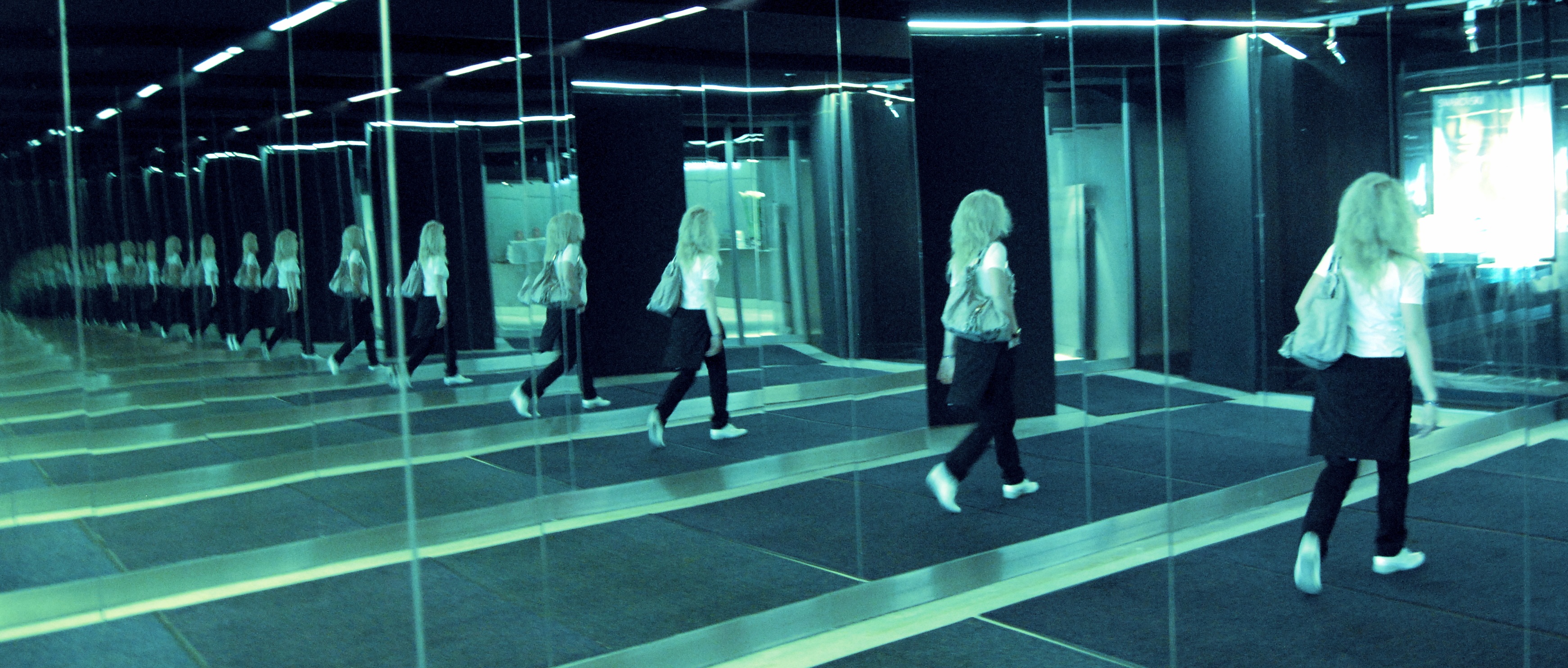
Infinity woman. Permission: used under a CC0 license.

I’m going to deviate from yarn crafts for a moment and talk about art in general.

There’s a concept that applies to all arts and crafts:

  • 1x is a mistake
  • 2x is weird
  • 3x (or more!) is a pattern.
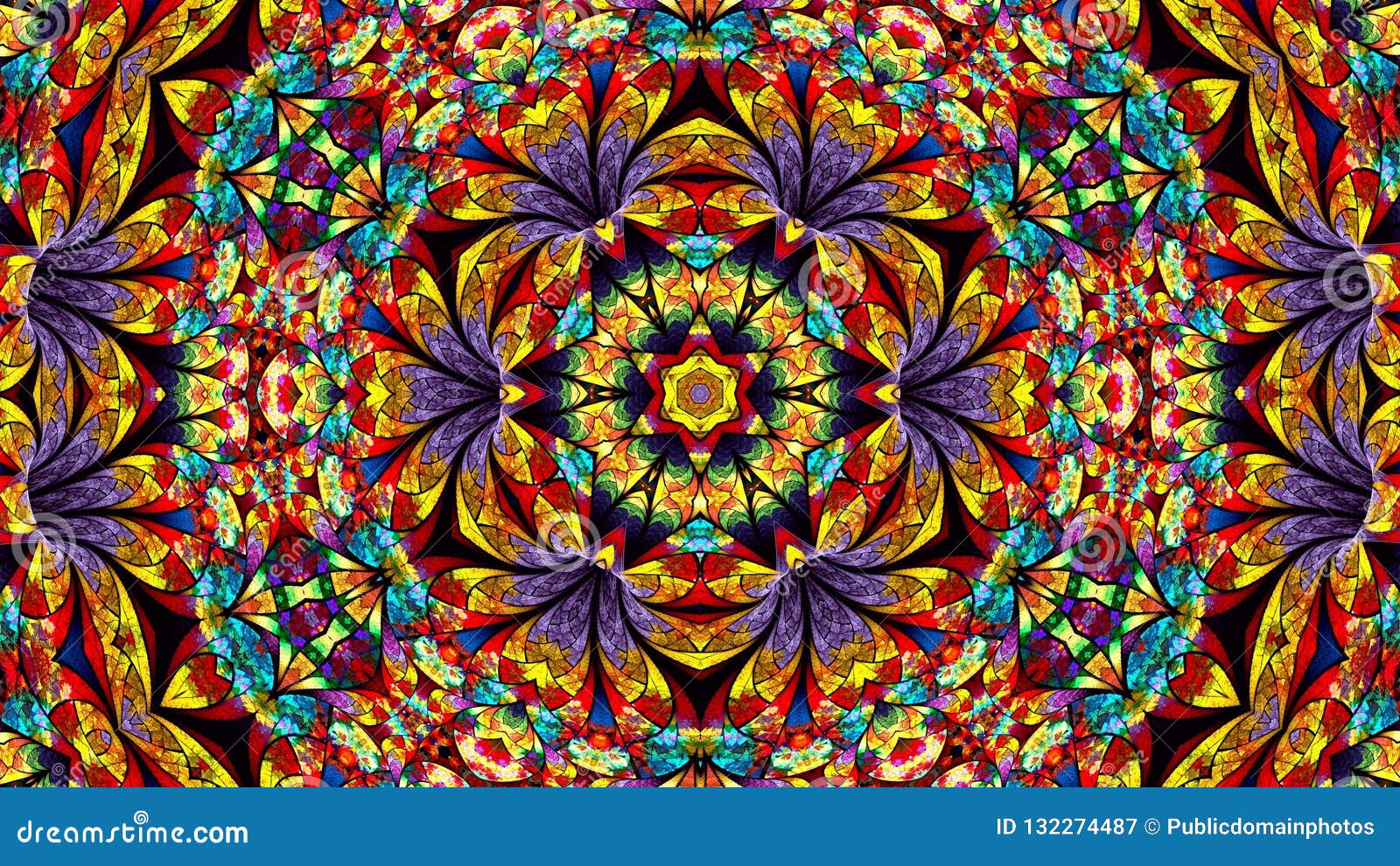
Repetition creates motifs, or design features.  The human brain is hardwired to search for patterns, and there is a tendency to find rhythmic repetition pleasing.  Music is one example of that.  But it holds true visually as well.  Children (and adults) have been fascinated with kaleidoscopes, and infinity mirrors for as long as we’ve had the ability to create them.

Kaleidoscope. Permission: Public domain

Grouped paintings (triptychs for example) are often prettier together than when viewed separately, and the separation between panels becomes part of the work of art.  (Remember that bit about the separation - it's important later).

Take a look at this one:

The Crucifixion by Rogier van der Weyden, 1445. Permission: Public domain

Look at the work as a whole, and evaluate the story being depicted. Now, one at a time, look at each panel alone (hold your hands up over the screen and block the panels you don’t want to see).

Notice how you only get part of the story?  Now look at the work as a whole again. See how there are repeated motifs - each panel has at least one dark angel at the top, and has the same shade of red somewhere in it, and the right two panels have blue in the clothing, but the left panel doesn’t - it’s primarily dark and the heaviness helps to balance the much greater red content on the right.

Quilts (hey, at least we are talking about a fiber art now!) are another excellent example of theme  repetition.  Many traditional designs repeat a motif over and over, each one slightly varied.  Go to Google and search for “Sunbonnet Sue Quilt.”  Click on images and scroll down.  Do you see how the repetition with slight difference can be really pleasing to the eye?

Modern quilts (and some traditional ones) may have little, or no repetition in the pieced top - instead, the quilting stitch pattern that holds the layers of the quilt together is repetitive. And often BOTH are.  Even the type of quilt called a “crazy quilt” typically repeats motifs in some manner, as shown here.

Small Sized Silk Crazy Quilt made by Mrs. Brown circa 1890.
Permission: Missouri Historical Society Open Access Policy

What does this have to do with yarn crafts?  I’m glad you asked. :-)

Often, you’ll see discussion among knitters who have made a mistake in their knitting, and someone usually offers up “repeat it and it becomes a design feature.”  And while they are totally right, it’s extraordinarily difficult to deliberately repeat an actual mistake and have it turn out well (and not just look like multiple mistakes).  Possible, yes. Easy, no.  But it’s not really about correcting mistakes, it’s about experiencing the repetition of a motif from the moment you start knitting with variegated yarns.

  • Variegated yarns are themselves a repetition of a motif.   
  • Variegated yarns are in and of themselves a repetition of a motif.   
  • Variegated yarns repeat a color motif.   

The colors repeat rhythmically, in a predictable fashion.  That property is at the HEART of these yarns. 

What makes working with variegated yarns difficult - and yes incredibly exciting and surprising - is that knit and crochet and weaving is ALSO rhythmic and repetitive. And it is the intersection between the rhythmic activity and the rhythmic colors where the magic happens.

So, is it any surprise, that much of the advice to achieve the various effects also involves different forms of repetition?

  • Do you want to break up pooling and mix the colors more?  Alternate skeins every other row or every round or two; or if you’ve only got one skein, knit from both ends.  
  • Do you want to flash the colors?  Easy - repeat the magic number.
  • Do you want to concentrate the colors? Repeat a short rows sequence every time you encounter a certain color 
  • Do you want to pair with a solid?  Stripes, Brioche and slip stitches to the rescue.  

Not all of the techniques involve repetition, but most do.

Back to TOC, or go to Part 3.

Periodicity 1: Introduction

Photo © Cathy Weeks
Periodicity: Variegated Yarns
Or: 
The Yarnie’s Dilemma: How to make a colorful silk purse out of a clown barf sow’s ear


I have a not-so secret obsession: I love variegated yarns.  I’m drawn to them, and I rarely resist their siren-call.

The problem?  They are hard to knit with.  They produce weird fabric that ranges from wonderfully colorful to really, really ugly - a strange, mottled mess that you wouldn’t be caught dead wearing.

And, it’s entirely subjective. Some people love the flickery wash of color, while others hate it. I know of knitters and crocheters who - as much as they love the look of the multi-colored skein of yarn - refuse to buy them because they don't love the fabric they produce.

And because I love the yarns so much, I decided to explore what works and what doesn’t, and did what many yarnies do, and started a thread of Ravelry (you'll need a Ravelry ID to click through):

https://www.ravelry.com/discuss/techniques/3862920/ 

Many, many thanks to those knitters, crocheters, weavers and dyers who filled in the gaps in my knowledge. Thank you all for your considerable time and efforts.

Photo © Cathy Weeks

I hope to accomplish two things with this series:

  1. Help people figure out what to do with variegated yarns to create a fabric they will love.  In other words, help yarnies match a yarn to the right pattern.
  2. Encourage designers to specifically create patterns intended for variegated yarns that really emphasize and utilize the colorful nature of the yarn itself.


Before I get started, I should define some terms.

Yarnie: A person who works with yarn. I am a knitter but yarnies are all one fiber family, with spinners and dyers as the parents, and knitters, crocheters and weavers as the siblings who make fabric using the yarn produced by the parents. I tried to make this series as craft agnostic as possible, as many of the concepts apply across disciplines, though I suspect it will be of least use to weavers.

Variegated:  The dictionary will tell you it just means “multi-colored.”  But in this context, it means a multi-colored yarn that has relatively short sections of two or more colors that repeat in a predictable fashion.   It is not: "self-striping," tonal (two-toned), gradient, marled, tweed or speckled as its main attribute.  If you want to know more about these color types, see the colorful yarns appendix. Variegated yarns may include aspects of the above; gradients, marling, speckles may all be present in a variegated yarn.  And technically speaking, variegates do self-stripe, if the fabric is narrow enough (but more on that later).

A note on personal taste: As you read though this, you’ll almost certainly find yourself cringing at some of “good” items, and really liking some of the “bad” ones.  This is to be expected.  Just know that all photos used are either my own, or I had the permission of the person who made the item.  The purpose of this article is simply to show you what techniques are out there and allow you to chose which ones to use, to make the best of these lovely, difficult yarns.

Photo © Cathy Weeks

Want to keep reading? Back to TOC, or Periodicity 2: Pattern Recognition

Monday, December 31, 2018

Periodicity 12: Appendix C - Further Reading (Random Relevant URLs and Books)

Variegated Yarn Resources

URLs:

Videos:
Variegated yarn books:

Color knitting books with with some variegated yarn advice:

Other technique books that are good for variegated yarns (modular, etc.):

Other books that I think are probably useful but haven't really looked at:

* Books I own or have evaluated in person


Know of a good resources that's missing from above?  Let me know in the comments.

Saturday, December 29, 2018

Periodicity TOC: Variegated Yarn Technique Series


  1. Introduction 
  2. Pattern Recognition
  3. Common Effects
  1. Important Concepts
    • Intro to Color Theory
    • Stitch Count, Gauge, and Magic Number
    • Variegated Yarn Types
  1. Evaluating the Yarn
    • Evaluate Before Purchasing (if possible).
    • Evaluate After Purchasing (AKA “Testing, Testing, 1-2-3”)
  1. Methods for Mixing Colors MORE
    • Well-Mixed Fabrics (effects)
    • Stitches (Linen, Slip Stitches)
    • Alternating Skeins of SAME Colorway.
    • Alternating Skeins of DIFFERENT Variegated Yarns
  1. Methods for Mixing Colors LESS
    • Planned Pooling - Stacked (Controlled)
    • Planned Pooling - Offset: Argyles and Spirals (Controlled)
    • Planned Pooling - Expected Morphing (Uncontrolled)
    • Dropped Stitch Patterns
    • Skinny Rows (Self-Striping) 
    • Short Rows - Geometric Tessellations
    • Short Rows - Freeform
  1. Pairing with a Neutral
    • Stripes
    • Brioche
    • Twigg
    • Double-knitting
    • Stained Glass
    • Two Strands Held Together
    • Slipped Stitches (Ball Band-Type Pattern)
    • Swing Knitting
  1. Other Emphasis
    • Diagonal
    • Bias
    • Sl wyif
  1. Miscellaneous Guidance
    • Picking the Right Cables
    • Stranded and Mosaic - CC Getting Lost
    • Stitch Effects (Garter, Stockinette, Reverse Stockinette)
    • Combining Techniques
    • Matching a Yarn to a Pattern - Better Living Using Searches 
    • Misc
  1. Weaving to the Rescue
  2. Appendixes